LAKE CHARLES, La. — Louisiana’s growing role in the global liquefied-natural-gas industry is being matched by a new federal investment in the research, safety and workforce infrastructure surrounding it.
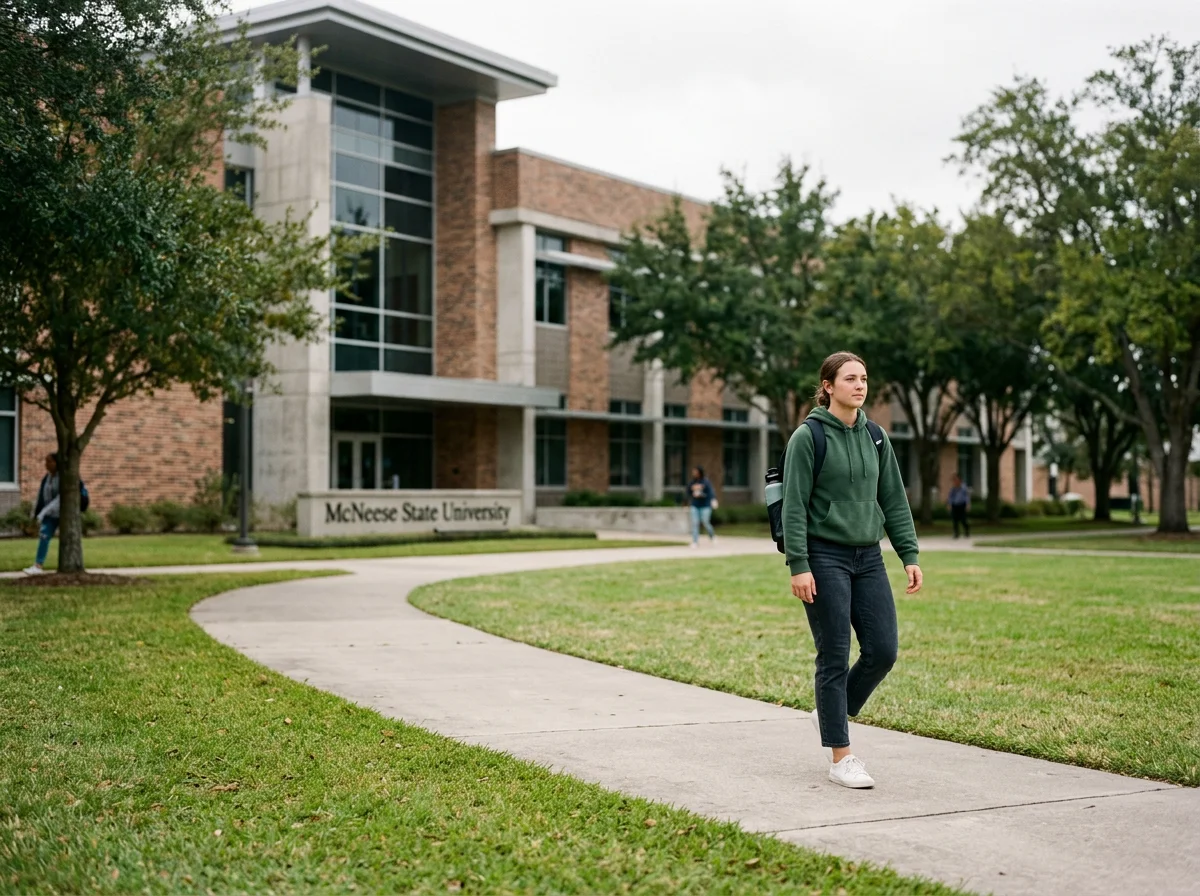
U.S. Sen. John Kennedy toured the National Center of Excellence for Liquefied Natural Gas Safety at McNeese State University this week and highlighted $5 million in fiscal year 2026 federal funding for the center.
The center opened in April after the U.S. Department of Transportation selected McNeese in May 2025 to host the national program. Kennedy had pushed for creation of the center through the PIPES Act of 2020 and later supported funding for its work.
The center brings together McNeese, the University of Louisiana at Lafayette, Southern University, federal agencies and industry partners. Its mission includes LNG safety research, workforce development and technical work intended to improve how the rapidly expanding industry operates.
That mission is particularly relevant in southwest Louisiana, which has become one of the most concentrated LNG corridors in the world. Operating and planned export terminals in Cameron and Calcasieu parishes represent tens of billions of dollars in capital investment and connect Louisiana natural gas to customers overseas.
The federal investment is small compared with the cost of an LNG terminal, but it addresses a different part of the industry: the expertise required to operate, regulate and improve those facilities safely.
Louisiana’s LNG expansion creates demand for engineers, operators, maintenance personnel, safety professionals, researchers and technicians. A national center located in Lake Charles gives Louisiana universities an opportunity to connect academic programs and applied research directly to an industry already operating in their backyard.
The center can also serve as a bridge between federal regulators and private companies. LNG facilities operate under extensive federal safety, pipeline, maritime and environmental requirements, and research into risk, equipment performance and emergency response can influence future standards and operating practices.
Kennedy’s office said the center’s work will focus on improving LNG safety, advancing research and strengthening workforce development. The senator toured the facility with LNG industry leaders and the presidents of McNeese and UL Lafayette.
For Louisiana, the strategic value is straightforward. The state is already competing aggressively for the physical infrastructure of the energy industry — export terminals, pipelines, storage caverns and power generation. The McNeese center is an attempt to capture more of the intellectual and workforce infrastructure that accompanies those investments.
That could matter as LNG projects become larger and more technically complex. A state that trains the workers, conducts the research and helps develop safety practices can potentially capture economic benefits beyond construction and plant operations.
The $5 million appropriation does not guarantee those outcomes. But it gives a relatively new national center resources to build research and training programs at a moment when southwest Louisiana’s LNG industry is continuing to expand.
Sources
U.S. Sen. John Kennedy — LNG Center of Excellence tour, Oct. 22, 2026