Posts filed under Louisiana

Boyce Secures $4 Million Community Deal as $3.6 Billion AI Data Center Rises Next Door

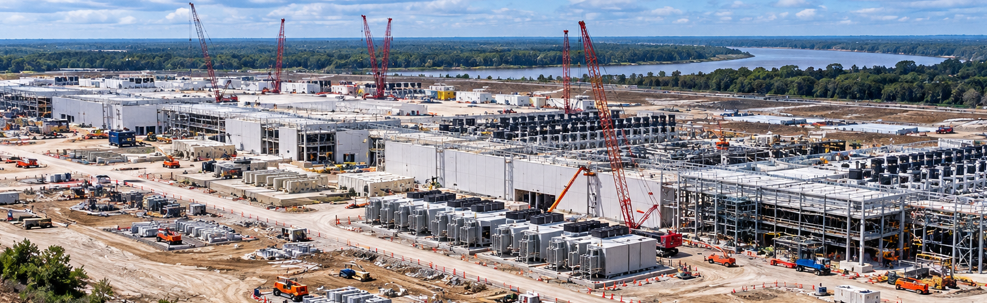
BOYCE, La. — The Town of Boyce has secured a $4 million community benefit agreement tied to Applied Digital's Delta Forge 1 AI data center, giving the small Rapides Parish community a direct financial commitment as one of Louisiana's largest new technology projects takes shape nearby.

Town officials announced the agreement Wednesday, October 14. The money is intended to support infrastructure improvements, town beautification, public spaces, community messaging and other local priorities.

The agreement is significant because Delta Forge 1 is being built just outside Boyce, placing the town among the communities most directly affected by the construction traffic, workforce activity and long-term growth associated with the $3.6 billion project.

A Direct Local Benefit From a Massive Project

Applied Digital announced Delta Forge 1 earlier this year as a roughly 300-acre artificial-intelligence infrastructure campus in Rapides Parish.

Louisiana Economic Development said the project is expected to involve a $3.6 billion capital investment. The campus is designed for high-performance computing and AI workloads and is part of Louisiana's rapidly expanding data-center sector.

The new $4 million agreement is separate from the broader state and local incentive structure associated with the project. Instead, it represents a direct commitment to Boyce for community-level improvements.

Mayor Kelvin McCoy said he pushed for the town to have a seat at the table because of its proximity to the development. Louisiana Central, the regional economic-development organization, also participated in the discussions with Applied Digital.

What the Money Can Do

The announcement does not prescribe a single construction project or spending list for the entire $4 million.

Instead, officials described a range of potential uses that include infrastructure, beautification, public-space improvements and other strategic investments intended to improve quality of life and prepare Boyce for future growth.

That flexibility could matter in a town where a multibillion-dollar development can create needs that were never contemplated in a normal municipal budget.

Large industrial and technology projects can increase pressure on roads, utilities, emergency services and housing even when the project itself sits outside municipal limits. Community benefit agreements are one way local governments and developers attempt to address those effects.

Applied Digital Says the Impact Should Extend Beyond the Fence Line

Applied Digital community engagement coordinator Gail Adams said the company believes the impact of a major investment should extend beyond the project site and create lasting opportunities for surrounding communities.

The agreement arrives as Louisiana communities are paying closer attention to the local consequences of the state's data-center boom.

Supporters point to construction activity, new tax revenue, infrastructure investment and the opportunity to diversify Louisiana's economy. Critics have raised questions about power demand, water use, tax incentives and whether host communities receive enough lasting benefit.

Boyce's agreement does not resolve those broader debates, but it provides a concrete example of a nearby community negotiating a direct benefit from a major data-center project.

The Test Will Be How the $4 Million Is Used

The agreement gives Boyce resources it otherwise would not have had, but the long-term value will depend on how the town prioritizes and manages the money.

Investments that address durable infrastructure needs could continue benefiting residents long after Delta Forge 1 is completed. Short-term or poorly coordinated spending would have a much smaller effect.

For Boyce, the opportunity is unusual: a town next to a multibillion-dollar project now has a dedicated pool of money to make improvements of its own.

The next important question is not whether the agreement exists. It is which projects Boyce chooses to fund with it.

Source Notes

KALB — Applied Digital agrees to $4 million community benefit deal for Boyce: https://www.kalb.com/2026/10/14/applied-digital-agrees-4-million-community-benefit-agreement-boyce/

Louisiana Economic Development — Delta Forge 1 project announcement: https://www.opportunitylouisiana.gov/news/applied-digital-announces-3-6-billion-ai-factory-campus-in-rapides-parish


Posted on October 15, 2026 and filed under Data Center, Louisiana.

Louisiana Leads Nation in Broadband Buildout as GUMBO 2.0 Reaches Rural Communities

Louisiana is once again finding itself at the front of the pack when it comes to turning federal broadband dollars into actual infrastructure.

Through the state’s GUMBO 2.0 program, Louisiana officials say the state has now delivered two more national firsts in the federal Broadband Equity, Access and Deployment program: the first community in the country to receive BEAD-funded fiber service and the first provider in the nation to begin construction on a BEAD-funded fiber network.

That distinction matters because broadband programs have often been criticized for moving slowly through layers of federal approval, planning and bureaucracy.

Louisiana is now pointing to actual customers, active construction and Louisiana-based companies doing the work.

Pelican Broadband has connected the nation’s first BEAD-funded fiber customers in Coushatta, while SkyRider Communications has begun construction on another federally supported fiber network in northern Louisiana.

Louisiana contractor Etheridge Pipeline & Conduit is also participating in the work.

The projects represent the kind of result taxpayers should expect from major infrastructure spending: completed work, local contractors and measurable service reaching communities that need it.

Rural Louisiana Starts Seeing Results

Coushatta, a small Red River Parish community of roughly 1,750 residents, is now home to the first customers in the country receiving fiber internet through the BEAD program.

Pelican Broadband’s GUMBO 2.0 project includes approximately 100 miles of fiber infrastructure and is expected to bring fiber-to-the-home service to 1,102 locations.

According to ConnectLA, 221 locations are already serviceable.

The full project is expected to be completed by September 2027.

Pelican Broadband President and CEO Mike George said the project fits the company’s long-standing mission of serving rural Louisiana.

“Pelican Broadband has been connecting rural Louisiana since 1948, and this is the same work we have always done — reaching the homes that are hardest to reach,” George said.

The company says the new fiber network will be capable of delivering speeds of up to 10 gigabits per second.

Another Louisiana Company Breaks Ground First

In northern Louisiana, SkyRider Communications has become the first provider in the country to begin construction on a BEAD-funded fiber project.

The company received GUMBO 2.0 funding to serve approximately 700 locations, though the overall project is expected to connect more than 1,000 homes, farms and businesses.

State officials say roughly 80% of the underground duct installation is complete and fiber cable is actively being pulled.

The first customers are expected to come online soon, with the full buildout projected for the first quarter of 2027.

SkyRider President and CEO Brad Warden credited Louisiana’s preparation and early action for allowing the project to move ahead of other states.

“ConnectLA’s leadership made Louisiana number one in the nation for federal BEAD readiness, which empowered us to be the first company in the country to break ground and start building,” Warden said.

Landry: Results Matter More Than Announcements

Gov. Jeff Landry framed the milestone as an example of government funding producing visible, practical results.

“This isn’t about dollars on a spreadsheet; it’s about results that people can see,” Landry said.

“We’re going to be running fiber into rural parishes and putting that work in the hands of Louisiana companies. We’re not just talking about closing the digital divide; we’re actually accomplishing it.”

That is the key distinction.

Government programs are easy to announce. Press conferences, grant awards and promises are common.

What matters is whether infrastructure actually gets built and whether residents actually receive service.

In this case, Louisiana can point to customers already connected and construction crews already working.

Louisiana Continues to Lead BEAD Rollout

According to ConnectLA, Louisiana had already achieved several other firsts in the national BEAD rollout.

The state says it was the first to secure federal approval, the first to distribute BEAD funding and the first to activate a BEAD-funded broadband tower.

Louisiana now adds first fiber customers and first fiber construction to that list.

The state says it remains on track to achieve statewide broadband coverage by 2028.

For rural Louisiana, that could have significant consequences.

Reliable high-speed internet is no longer a luxury. It affects education, small businesses, agriculture, telemedicine, remote work and whether rural communities can compete economically with larger cities.

Louisiana still has a long way to go before every project is completed, and taxpayers should continue watching costs, timelines and performance closely.

But the early results are difficult to ignore.

While other states are still working through the process, Louisiana companies are already putting fiber in the ground and connecting customers.

That is the kind of progress worth recognizing.

Source: Louisiana Office of Broadband Development and Connectivity — ConnectLA

Posted on October 14, 2026 and filed under Internet, Louisiana.

Louisiana Closes Recreational Greater Amberjack Season as Gulf Catch Target Is Reached

BATON ROUGE, La. — Louisiana recreational anglers can no longer keep greater amberjack after state officials matched a federal Gulf closure that took effect at 12:01 a.m. Wednesday, October 14.

The Louisiana Department of Wildlife and Fisheries issued an emergency declaration closing the recreational season in state waters after federal fisheries managers projected that anglers would reach the 2026-27 recreational catch target.

The closure brings Louisiana state waters into alignment with federal Gulf waters and ends a 43-day recreational season that began September 1.

For offshore anglers, the practical rule is straightforward: the recreational bag and possession limit for greater amberjack is now zero during the closure.

Why the Season Closed

NOAA Fisheries set the 2026-27 recreational annual catch limit for Gulf greater amberjack at 404,000 pounds.

The more restrictive annual catch target — the level used to trigger the in-season closure — is 335,320 pounds.

Federal fisheries managers projected that recreational landings would reach that target by October 14, requiring the federal season to close.

NOAA announced the season dates in June, meaning the October closure was projected in advance rather than being an unexpected midseason action.

The 43-day season was nevertheless substantially longer than the 26-day recreational season available in 2025.

Louisiana Matches the Federal Closure

Louisiana's regular recreational rules list a one-fish-per-person daily limit for greater amberjack with a 34-inch minimum fork length during the open season.

State waters extend offshore from Louisiana's coast, while federal waters cover the Gulf beyond the state boundary.

LDWF Secretary Tyler Bosworth used an emergency declaration to align Louisiana's state season with the federal closure.

The department said compatible state and federal seasons make the rules easier to enforce and support efforts to prevent continued overfishing.

For federally permitted charter vessels and headboats, federal rules also prohibit possession of greater amberjack in state waters during the federal closure.

An Overfished Gulf Species

Greater amberjack are large reef-associated fish prized by offshore anglers for their size and fighting ability.

They are also classified as overfished in the Gulf, meaning the population is below the level fisheries managers consider sustainable.

Catch limits and shortened seasons are designed to control fishing pressure while the stock rebuilds.

The closure does not mean fishing for other offshore species automatically stops. Anglers still need to follow the separate seasons, size limits, bag limits and federal or state rules applicable to each species they target.

When Amberjack Fishing Is Expected to Resume

NOAA says the recreational greater amberjack closure will remain in place until the next scheduled season begins September 1, 2027, unless regulations change before then.

That gives Louisiana anglers nearly eleven months before the currently scheduled reopening.

The 2026 season demonstrates how quota-based fisheries can differ from fixed calendar seasons. Even when a season is announced months in advance, the controlling factor is ultimately how much fish managers expect recreational anglers to harvest.

For Louisiana's offshore fishing community, October 14 therefore marks the end of amberjack harvest for the current recreational fishing year — even though boats can continue targeting other legal Gulf species.

Source Notes

NOAA Fisheries — 2026-27 Greater Amberjack recreational season and closure: https://www.fisheries.noaa.gov/bulletin/recreational-fishing-season-length-announcement-greater-amberjack-federal-waters-gulf

NOAA Fisheries — Gulf fishing regulations and seasonal closures: https://www.fisheries.noaa.gov/southeast/rules-regulations/fishing-regulations-and-seasonal-closures-gulf-america

Louisiana Department of Wildlife and Fisheries — recreational saltwater finfish regulations: https://www.wlf.louisiana.gov/page/recreational-saltwater-finfish

Louisiana Sportsman — LDWF Oct. 13 closure announcement: https://www.louisianasportsman.com/fishing/offshore-fishing/ldwf-announces-recreational-greater-amberjack-season-to-close-on-oct-14-2026/

Posted on October 14, 2026 and filed under Louisiana.

Economic Forecast: Louisiana Could Add 55,000 Jobs as Data Centers, LNG and SpaceX Drive Growth

Louisiana could add roughly 55,000 jobs over the next two years as major industrial and technology projects move forward across the state, according to a new economic forecast from economist Dr. Loren Scott.

The forecast points to an unusual combination of growth drivers: data centers in north and central Louisiana, liquefied natural gas projects in the southwest and new aerospace and drone activity in Acadiana.

Scott told Louisiana Radio Network that the state is expected to see stronger job growth than usual because of the wave of large projects now under development. Lake Charles is projected to post the fastest percentage growth, adding about 6,000 jobs over the next two years. Scott tied much of that increase to three LNG export projects — two in Cameron Parish and another near Sulphur — and said the region has about $64 billion worth of projects underway.

Acadiana is projected to add approximately 5,600 jobs. Scott specifically cited the planned SpaceX facility in Vermilion Parish and growth in the drone industry as major factors behind that estimate.

That forecast could have a major impact across Lafayette, Iberia, Vermilion and surrounding parishes. Large aerospace and industrial projects rarely create only direct jobs at the project site. They also generate demand for construction workers, safety professionals, equipment operators, engineers, transportation providers, suppliers and other contractors.

North Louisiana is also expected to benefit from the rapid expansion of data-center construction. Scott pointed to additional projects around Monroe, Shreveport and Alexandria. Monroe is projected to be the second-fastest-growing region in the state, helped by construction of Meta’s massive data-center project in Richland Parish.

Not every part of the state is expected to grow at the same pace. Scott projected only about 1 percent job growth for New Orleans, where he said the continued post-pandemic decline in convention activity is weighing on the local economy. St. Tammany Parish is forecast to add about 1,100 jobs over the same period.

The numbers remain a forecast, and major construction schedules can change. Projects can be delayed by financing, permitting, labor shortages or changes in the broader economy. Still, the scale of investment now planned for Louisiana gives the state a stronger jobs pipeline than it has seen in many years.

For South Louisiana in particular, the combination of LNG, aerospace, fabrication, construction and energy investment could create opportunities for workers with industrial experience while also increasing demand for younger workers entering skilled trades and technical fields.

If Scott’s projections hold, the next two years could become an important test of whether Louisiana has enough trained workers to take advantage of the investment already headed its way.

Source: Louisiana Radio Network — “New economic report forecasts Louisiana to add 55,000 new jobs over the next two years” (Oct. 7, 2026)

Posted on October 13, 2026 and filed under Louisiana.

Federal Offshore Leasing Remains Critical Issue for Louisiana Energy and Coastal Funding

Louisiana’s relationship with offshore oil and gas development reaches far beyond the rigs operating in federal waters. Federal leasing decisions affect jobs, service companies, ports, tax revenue and even money used for coastal restoration, making offshore energy policy a continuing economic issue for the state.

A recent guest column published by NOLA.com argued for maintaining predictable access to federal offshore oil and gas leases. That debate has shifted significantly in recent years, but the underlying Louisiana interest remains the same: companies make long-term investment decisions based in part on whether they expect future acreage to be available for exploration and development.

Federal policy now requires a much more predictable schedule than existed only a few years ago. The Bureau of Ocean Energy Management says current federal law mandates 36 offshore oil and gas lease sales in the Gulf and Alaska’s Cook Inlet through 2040. The schedule includes recurring Gulf lease sales intended to provide greater certainty for producers and related industries.

That certainty matters in Louisiana because offshore production supports far more than drilling crews. The industry feeds work to fabrication yards, marine transportation companies, engineering firms, helicopter operators, ports, pipeline companies, equipment suppliers and contractors throughout South Louisiana.

The state also has a direct financial stake in offshore production. Under the Gulf of Mexico Energy Security Act, Louisiana and its coastal political subdivisions receive a share of certain federal offshore revenues. Court records in litigation over federal leasing noted that Louisiana and its coastal parishes received more than $156 million in such revenue for fiscal year 2023.

Those dollars are especially important because Louisiana uses offshore revenue for coastal protection and restoration. In a state losing land to subsidence, erosion and storms, energy policy and coastal policy are often tied together in ways that are easy to overlook in the national debate.

Supporters of expanded leasing argue that regular lease sales strengthen domestic energy production, support Gulf Coast employment and reduce uncertainty for companies making multibillion-dollar investments. Critics counter that the federal government must also weigh environmental impacts, greenhouse-gas emissions and long-term risks to coastal and marine ecosystems.

Louisiana has repeatedly challenged federal attempts to reduce or alter offshore leasing. The state has argued in court that pauses and restrictions can reduce future production, economic activity and revenue. Federal courts have also dealt with disputes over lease-sale timing, acreage and environmental conditions.

The current leasing schedule does not end those debates, but it does give the Gulf energy sector a clearer view of what the federal government intends to offer over the coming years. For Louisiana workers and businesses tied to offshore energy, that predictability may prove almost as important as the individual lease sales themselves.

Source: NOLA.com — Guest Commentary on Federal Offshore Leasing | Bureau of Ocean Energy Management — National OCS Program | U.S. Treasury — Gulf of Mexico Energy Security Act (GOMESA)

Posted on October 13, 2026 and filed under Louisiana, Oil and Gas.

Louisiana Has the Nation's Lowest Residential Electricity Rate — but Heavy Usage Keeps Monthly Bills High

BATON ROUGE — Louisiana households are paying the lowest average residential electricity rate in the country in the latest federal data, but that advantage does not necessarily translate into a small monthly bill.

New U.S. Energy Information Administration data for July 2026 show Louisiana residential customers paid an average of 12.72 cents per kilowatt-hour. That was below every other state in the federal table and far below the national residential average of 18.31 cents per kilowatt-hour.

Yet Louisiana households also use substantially more electricity than the national average, meaning a low price for each kilowatt-hour can still produce a monthly bill above $200.

Low Rate, High Consumption

The distinction between an electricity rate and an electricity bill is important.

The rate measures what customers pay for each unit of electricity. The bill reflects both that rate and how much electricity a household consumes.

Louisiana's hot, humid climate, widespread use of air conditioning and housing characteristics contribute to high residential electricity consumption. Based on the latest EIA data, Louisiana households averaged roughly 1,669 kilowatt-hours of electricity use in July.

At the statewide average rate, that translates to an average residential bill of about $212 for the month.

By comparison, the national average residential rate was much higher, but average household consumption nationally was substantially lower.

Rates Fell From a Year Earlier

The July figures also show Louisiana's average residential electricity price below its level from the same period a year earlier.

EIA's monthly state table lists Louisiana at 12.72 cents per kilowatt-hour for July 2026, compared with 13.12 cents in the comparable prior-year column.

That is a roughly 3% decline in the average effective residential rate.

The numbers are statewide averages. Individual customers can pay considerably more or less depending on their utility, rate class, fuel adjustments, usage and other charges.

Why This Matters as Louisiana Adds Huge New Power Loads

The data arrive while Louisiana is simultaneously pursuing some of the largest electricity-consuming industrial projects in its history.

Artificial-intelligence data centers planned or under construction in Richland, West Feliciana, Caddo, Bossier and Rapides parishes are creating unprecedented new demand for generation and transmission.

At the same time, LNG terminals, chemical plants and other industrial developments continue to add large loads along the Gulf Coast.

That has pushed questions about electric rates, generation costs and who pays for new infrastructure into the center of Louisiana's economic-development debate.

Regulators and utilities are now being asked to accommodate enormous new customers while protecting existing residential and commercial customers from costs that should properly be assigned to those projects.

The Cheapest Rate Does Not Mean the Cheapest Bill

Louisiana's No. 1 ranking on residential electricity price is therefore good news with an important qualification.

A household paying 12.72 cents per kilowatt-hour is buying electricity at a much lower unit price than a household in many other states. But if the Louisiana household uses hundreds of additional kilowatt-hours because of summer heat and air-conditioning demand, much of that rate advantage can disappear on the final bill.

Energy efficiency, insulation, air-conditioning performance and thermostat settings can therefore matter almost as much as the posted electric rate for an individual household.

The July numbers also should not be treated as a forecast of future rates. EIA's monthly data look backward and are published with a lag. Louisiana's electric system is entering a period of unusually large capital investment, and future bills will depend on fuel costs, utility construction, regulatory decisions and the way costs associated with new industrial loads are allocated.

A Useful Benchmark

Still, the federal data provide an important benchmark as Louisiana debates the cost of powering its next wave of industrial growth.

The state currently enjoys one of its longstanding economic advantages: relatively inexpensive electricity.

The challenge will be preserving that advantage for households and existing businesses while utilities build enough generation and transmission to serve projects whose power requirements can rival those of entire cities.

Source Notes

U.S. Energy Information Administration — Electric Power Monthly, Table 5.6.A: https://www.eia.gov/electricity/monthly/epm_table_grapher.php?t=epmt_5_6_a

U.S. Energy Information Administration — Electric Power Monthly: https://www.eia.gov/electricity/monthly/

Posted on October 13, 2026 and filed under Louisiana.

Lake Charles Takes Center Stage as Global LNG Industry Gathers in Southwest Louisiana

LAKE CHARLES, La. — Southwest Louisiana's role in the global liquefied natural gas business is getting an international spotlight this week as the 22nd Americas LNG Summit & Exhibition opens in Lake Charles.

The three-day event runs October 13-15 at the Lake Charles Event Center and is expected to draw more than 5,000 attendees from across the LNG supply chain. Organizers say more than 300 companies are represented, with government officials, project developers, engineering and construction firms, equipment suppliers and energy buyers among those participating.

For Louisiana, the significance goes beyond hosting another industry conference. The summit is taking place in the middle of one of the world's most concentrated LNG development corridors, where operating export terminals and multibillion-dollar projects have turned the Lake Charles-Cameron Parish area into a central piece of U.S. energy infrastructure.

This year's event is also being held for the first time under the official auspices of the State of Louisiana.

Louisiana's LNG Buildout Is Still Growing

Southwest Louisiana already hosts major LNG infrastructure, and additional projects are moving through construction, expansion and federal regulatory processes.

Federal Energy Regulatory Commission records show Louisiana remains home to a large share of the country's existing and proposed LNG export capacity. Projects in Cameron, Calcasieu and Plaquemines parishes are part of a broader Gulf Coast buildout that has helped make the United States the world's largest LNG supplier.

The conference arrives as developers face a different challenge than simply securing permission to build. The industry is now focused heavily on project execution: controlling construction costs, finding skilled workers, securing equipment and contractors, building pipelines and power infrastructure, and signing long-term customers needed to finance new facilities.

Those issues are especially relevant in Southwest Louisiana, where multiple large industrial projects can compete for the same welders, pipefitters, electricians, operators and construction managers.

A Procurement Opportunity for Louisiana Companies

One of the more practical parts of the summit for Louisiana businesses is its Procurement Village, which is designed to connect project owners, engineering and construction companies, procurement teams, subcontractors and vendors.

That matters because the economic impact of LNG development is not limited to the companies that own the export terminals.

Large LNG projects require fabrication, industrial construction, marine transportation, trucking, inspection, safety services, equipment rental, environmental work, maintenance and a long list of specialty contractors. Louisiana companies already serving the oil-and-gas and petrochemical industries are positioned to compete for much of that work.

The event also includes an Innovation & Workforce Stage and a Leaders of Tomorrow program aimed at connecting students with companies in the energy sector.

Landry Among Government and Industry Speakers

Gov. Jeff Landry is among the government officials scheduled to participate in the summit, along with U.S. Under Secretary of Energy Kyle Haustveit, U.S. Rep. Julia Letlow and federal pipeline-safety officials.

Executives from companies involved in major Gulf Coast energy projects are also scheduled to participate, including representatives from Bechtel Energy, Woodside Energy and Cheniere.

The presence of both government and industry leaders reflects how closely LNG development is tied to federal permitting, pipeline regulation, international trade and state economic-development policy.

Why Lake Charles Matters

Lake Charles has become a natural gathering point for the industry because the surrounding region combines several assets that LNG developers need: access to abundant natural gas, deepwater shipping channels, pipeline infrastructure, industrial construction expertise and a workforce accustomed to large energy projects.

The region also illustrates the tradeoffs that accompany rapid industrial growth. Large projects can generate construction activity, tax revenue and demand for local businesses, while also increasing pressure on roads, housing, utilities and the skilled-labor market.

Those questions are likely to remain important as additional LNG projects advance along the Louisiana coast.

The summit itself does not represent approval of any new LNG facility, nor does participation by state officials guarantee that individual projects will be built. Projects still face their own financing, permitting, construction and commercial requirements.

But the decision to bring thousands of LNG executives, suppliers and policymakers to Lake Charles underscores something already visible across Southwest Louisiana: the region is no longer simply participating in the U.S. LNG industry. It is one of the places where the industry's next phase is being decided.

Source Notes

Americas LNG Summit & Exhibition — official event site: https://www.americaslngsummit.com/

Americas LNG Summit — September 28, 2026 press release: https://www.americaslngsummit.com/press-release-september-28-2026/

Federal Energy Regulatory Commission — LNG overview: https://www.ferc.gov/natural-gas/lng

Posted on October 13, 2026 and filed under Louisiana, Oil and Gas.

Landry Administration Puts $3.5 Billion Rural Louisiana Push in Focus — Here’s Where the Money Is Going

RUSTON, La. — The Landry administration is putting a combined price tag of more than $3.5 billion on three major initiatives aimed at rural Louisiana, bringing together broadband construction, roads and bridges, and a sweeping new rural health program under one economic-development message.

Gov. Jeff Landry joined officials from ConnectLA, the Office of Louisiana Highway Construction and the Louisiana Department of Health in Ruston to highlight the initiatives, which the administration says are intended to improve the ability of Louisiana residents to live and work in rural communities.

But the $3.5 billion figure is not one new appropriation or a single pool of state money.

It combines several programs with different funding sources, timelines and objectives — including substantial federal funding.

Understanding those differences provides a clearer picture of what Louisiana is actually spending, what has already begun and what remains to be delivered.

More Than $1.5 Billion for Broadband

The largest pieces of Louisiana's rural investment strategy include the state's ongoing broadband buildout.

ConnectLA says Louisiana is deploying more than $1.53 billion in federal broadband funding through programs designed to reach homes and businesses that still lack adequate high-speed internet service.

A major portion comes from the federal Broadband Equity, Access and Deployment program, commonly known as BEAD.

Louisiana received approximately $1.355 billion in BEAD funding through the federal Infrastructure Investment and Jobs Act.

The state has moved unusually quickly in putting that money into projects.

Louisiana became the first state to execute BEAD grant agreements and the first to begin distributing BEAD infrastructure payments to internet providers. Construction is now underway on projects around the state.

The governor's office currently reports that about 93% of Louisiana is served by high-speed internet, compared with 83% when Landry took office. The administration says approximately 450,000 additional Louisiana residents have gained access during that period, supported in part by publicly funded broadband projects.

ConnectLA Executive Director Veneeth Iyengar said the agency expects roughly 95% of Louisiana to have reliable internet access by the end of 2026.

The state's longer-term goal is statewide high-speed internet access by 2028.

ConnectLA also projects approximately $400 million in consumer savings over four years associated with the broadband program.

That estimate, however, is a projection rather than money already returned to Louisiana households.

$580 Million for Roads and Bridges

A second component of the administration's rural investment total is approximately $580 million being advanced through the Office of Louisiana Highway Construction.

According to the administration, 152 road and bridge projects are underway as part of that effort.

The Office of Louisiana Highway Construction was established to oversee and accelerate highway and bridge projects, with an emphasis on project management, procurement, accountability and completing projects more quickly.

Transportation infrastructure can be particularly consequential in rural Louisiana, where deteriorating bridges or highway restrictions can affect agriculture, energy operations, school transportation and industrial development.

The administration argues that improving those connections is therefore an economic-development issue as much as a transportation issue.

Unlike the BEAD broadband allocation, which is principally tied to federal broadband funding, the highway initiative involves strategic use of state infrastructure dollars.

The ultimate measure of the $580 million program will be how many of the identified projects move from construction to completion, along with whether they are delivered within their projected budgets and schedules.

$1.4 Billion Rural Health Transformation

The third major component is Louisiana's Rural Health Transformation Program.

The Louisiana Department of Health says the state received approximately $208.4 million for the program's first year and estimates that Louisiana could receive about $1.4 billion over five years.

The program is supported through the federal Rural Health Transformation Program administered through the Centers for Medicare & Medicaid Services.

Louisiana's application says nearly 1.1 million people — approximately 24% of the state's population — live in rural parishes.

LDH intends to use the program to address access to health care, workforce shortages, health outcomes and the financial sustainability of rural health systems.

Health Secretary Bruce Greenstein described the effort as more than simply an injection of money into existing rural hospitals and clinics.

“We aren’t just investing in rural healthcare; we’re improving how it works,” Greenstein said in the administration's announcement.

Among the challenges identified by LDH are shortages of health-care professionals and the difficulty rural residents can face obtaining specialty and other medical care without traveling significant distances.

The program is designed to operate over several years, meaning the entire $1.4 billion should not be viewed as money already spent in Louisiana.

Why the Administration Is Linking the Programs

Although broadband, highways and health care might appear to be separate issues, the administration is presenting them as parts of the same rural-development problem.

A community attempting to retain residents or attract an employer faces disadvantages if it lacks dependable internet service, adequate transportation infrastructure or reasonable access to medical care.

Landry framed the initiatives around keeping younger Louisiana residents in the communities where they grew up.

“Rural Louisiana has helped build this country and power its industries for generations,” Landry said. “We want our young people across Louisiana to see a future here.”

The administration's argument is that improving basic infrastructure can make rural communities more competitive for businesses while improving quality of life for existing residents.

$3.5 Billion Comes With an Important Asterisk

The administration's combined $3.5 billion figure is substantial, but it requires context.

It should not be interpreted as $3.5 billion in new Louisiana state spending announced this week.

The total combines multiple programs, includes major federal awards and stretches across different implementation periods.

Some projects are already under construction. Others will unfold over several years.

The broadband program, for example, relies heavily on federal BEAD and other federal infrastructure funding. The rural health initiative is also federally supported and is expected to run for five years.

That means the more important question for taxpayers and rural communities will eventually be less about the headline dollar figure and more about measurable results.

How many previously unserved homes actually receive broadband?

How many bridges and roads are completed?

Does rural access to doctors and other medical professionals improve?

And do those investments make it easier for rural communities to retain residents, businesses and jobs?

Those outcomes will determine whether Louisiana's multibillion-dollar rural investment strategy ultimately produces the transformation the administration is promising..

Source Notes

ConnectLA — Louisiana broadband information: https://connect.la.gov/

Louisiana Department of Health — Rural Health Transformation Program: https://ldh.la.gov/

Louisiana Division of Administration: https://www.doa.la.gov/

ConnectLA/Gov. Landry rural investment announcement, October 12, 2026: https://mailchi.mp/la.gov/connectla-emails-10609868

Posted on October 12, 2026 and filed under Internet, Jeff Landry, Louisiana.

Meta Construction Boom Pushes Richland Parish Sales-Tax Revenue Toward $92 Million

The construction phase of Meta's massive Hyperion data-center campus is producing an economic surge in Richland Parish that is now showing up in restaurants, rentals, local suppliers and public tax collections.

New reporting published October 12 describes more than 7,500 construction workers tied to the project and a sharp rise in local business activity around Holly Ridge and nearby communities. Richland Parish sales-tax revenue, which totaled about $21 million in 2024, is projected to reach roughly $92 million by the end of 2026.

A Construction Workforce Larger Than Some Louisiana Towns

The nearly 10-million-square-foot Hyperion campus has become one of Louisiana's most visible examples of how a single megaproject can reshape a rural economy before the facility itself is fully operational.

Restaurants and coffee shops have expanded, new rental properties are serving workers, and companies supplying ice and other everyday needs have found a larger customer base. The effect extends beyond the data center's permanent employment because thousands of construction workers are spending money locally during the multiyear buildout.

Meta said in July that Louisiana businesses had already received more than $1.6 billion in contracts since construction began in December 2024. The company also said it plans more than $1 billion in local infrastructure improvements involving roads, water and wastewater systems.

The Permanent Economy Will Look Different

The construction boom should not be confused with the project's long-term employment footprint. Construction is expected to continue through the decade, while the number of permanent positions after buildout will be far smaller than the temporary construction workforce.

Meta has said the expanded campus is expected to support more than 1,000 operational roles once complete. That is substantial for Richland Parish, but it means businesses that have grown around thousands of construction workers will eventually have to adjust to a different customer base.

Some local entrepreneurs are already planning for that transition rather than assuming today's construction spending will continue indefinitely.

A Real-Time Test of Louisiana's Data-Center Strategy

Louisiana has aggressively recruited large data-center projects, arguing they can generate construction work, infrastructure investment and new tax revenue. Critics and regulators have simultaneously raised questions about electricity demand, utility costs, water use and the durability of promised economic benefits.

Richland Parish is now providing an unusually early case study. The immediate local spending and tax effects are measurable, but the longer-term judgment will depend on what remains after construction peaks: permanent jobs, infrastructure, a broader business base and sustainable public revenue.

For communities considering similar projects, that distinction may prove as important as the headline investment figure.

Source Notes

Business Insider, Oct. 12, 2026: https://www.businessinsider.com/meta-ai-data-center-construction-louisiana-local-business-growth-economy-2026-10

Meta Newsroom, July 13, 2026: https://about.fb.com/news/2026/07/teachers-local-businesses-win-as-meta-expands-louisiana-data-center/

Posted on October 12, 2026 and filed under Louisiana, Meta, Facebook.

Video: Woman Confronts Louisiana Congressional Candidate Rick Edmonds With Inappropriate-Touching Allegation

A Louisiana congressional race is facing a new controversy after video surfaced showing Republican activist Abby Crosby publicly confronting State Sen. Rick Edmonds with an allegation that he inappropriately touched her at a 2023 political event.

Edmonds strongly denies the allegation, calling Crosby’s account a fabrication.

The confrontation and the allegations surrounding it were first detailed in an investigation published by the Daily Mail, which reported that it obtained video of the September exchange.

Original reporting: Daily Mail, “Churchgoer confronts married Baptist pastor running for Congress with shocking allegation”
https://www.dailymail.com/news/article-16199357/rick-edmonds-abby-crosby-louisiana-congress.html

An archived copy of the original report is available here:
https://archive.is/2026.10.11-195641/https://www.dailymail.com/news/article-16199357/rick-edmonds-abby-crosby-louisiana-congress.html

The Confrontation

According to the Daily Mail report, the exchange occurred September 14 during a Livingston Parish Republican Executive Committee endorsement meeting at Carter Plantation in Springfield.

Edmonds, who is running for Louisiana’s 6th Congressional District, was discussing his legislative record and said he had supported measures protecting women.

Crosby then addressed him from the audience.

“Is that why you chose to grope me at an event for Jeff Landry at the Texas Club?” she asked, according to the video and Daily Mail report.

Edmonds immediately denied the accusation and said it was “not even remotely close to any truth.”

Crosby alleged that the incident occurred August 9, 2023, during a campaign event for then-gubernatorial candidate Jeff Landry at the Texas Club in Baton Rouge.

She told the Daily Mail that Edmonds approached her from behind, placed his hands around her hips and leaned toward her while making a comment about the pink dress she was wearing.

Edmonds disputes that account.

“I Have Witnesses”

During the recorded confrontation, Crosby told Edmonds that other people witnessed what happened.

“I have witnesses, Sir,” she said.

Edmonds responded by challenging her to produce them, saying he would answer questions about the allegation.

The Daily Mail subsequently interviewed Hollis Day, a friend of Crosby who was at the 2023 event and whom Crosby identified as a witness.

Day's account is significant — but it does not completely match Crosby's description of the incident.

Day told the outlet that he was approximately seven or eight feet away and saw Edmonds stop next to Crosby and put one hand around the side of her hip.

However, Day said the brief contact he witnessed did not appear sexual or inappropriate to him.

Day also could not hear what Edmonds said to Crosby.

He recalled Crosby immediately looking toward him afterward and asking whether he had seen the interaction. He said he told her that he had.

Day therefore corroborated that he saw an interaction involving physical contact, but he did not characterize what he witnessed as sexual or inappropriate and could not verify the alleged remark.

He also told the Daily Mail that he did not see Crosby chase Edmonds afterward, something Crosby said she had done.

Edmonds Denies Allegation

Edmonds has categorically rejected Crosby's version of events.

He told the Daily Mail that his wife was with him throughout the evening at the 2023 Landry event and argued that the behavior Crosby describes would likely have been noticed in a crowded venue containing numerous public officials, politicians and voters.

Day, however, told the outlet that Edmonds' wife was not beside him during the brief interaction he witnessed.

Edmonds has also raised questions about possible political motivations behind the accusation because Crosby and her husband previously supported State Sen. Blake Miguez, one of Edmonds' Republican opponents in the congressional race.

Crosby denies that any candidate or campaign directed her to confront Edmonds.

According to the Daily Mail, Crosby and her husband say they are now supporting another Republican candidate in the race, Larry Davis III.

A Controversy in a Closely Watched Republican Race

The allegation comes during an increasingly competitive Republican battle for Louisiana's newly configured 6th Congressional District.

Edmonds and Miguez are among the Republicans seeking the seat after Louisiana's congressional boundaries were redrawn earlier this year.

The Louisiana Republican Party's executive committee initially endorsed Miguez in August before subsequently endorsing Edmonds as well following criticism of the party's endorsement process.

The confrontation adds another volatile issue to a race that was already becoming increasingly contentious.

There are also important facts that should not be lost in the politics surrounding the allegation.

Crosby has publicly accused Edmonds of inappropriate touching.

Edmonds unequivocally denies the allegation.

A person Crosby identified as a witness told the Daily Mail that he saw Edmonds briefly place a hand near Crosby's hip, but he said the interaction did not appear sexual or inappropriate from his vantage point. He did not hear what was said.

Those distinctions matter.

At this point, the Daily Mail report presents competing accounts of what happened that night in 2023, and the publicly reported evidence does not independently establish Crosby's full allegation as fact.

What voters can see for themselves is the September confrontation in which Crosby directly raised the accusation and Edmonds immediately denied it.

As Louisiana's 6th District campaign moves toward Election Day, voters will ultimately have to decide how much weight — if any — they give the controversy.

Editor's Note: This story is based primarily on original reporting and video obtained by the Daily Mail. Cajun Conservatism has attributed allegations and responses to the individuals and sources involved and does not present disputed allegations as established fact.

Posted on October 12, 2026 and filed under Blake Miguez, Louisiana, Rick Edmonds.

River Bend Data Center Moves From Announcement to Visible Buildout Near St. Francisville

One of Louisiana's largest artificial-intelligence infrastructure projects is moving from plans and financing into a visible construction phase, with Hut 8's River Bend campus near St. Francisville now employing more than 1,200 workers on site.

Fresh reporting from a controlled media tour of the West Feliciana Parish project shows the first phase taking shape on what had been forested hunting land. The first of four data halls is expected to begin operating in early 2027, with Phase 1 completion projected over roughly 14 to 18 months.

The construction update matters because Louisiana's data-center pipeline contains projects at very different stages. River Bend is no longer simply an announced investment: buildings, utility infrastructure and supporting systems are being constructed for a contracted customer.

A 245-Megawatt First Phase

Hut 8 announced in December 2025 that it had signed a 15-year lease with Fluidstack for 245 megawatts of information-technology capacity at River Bend. The base lease carries a stated contract value of $7 billion, with Anthropic providing the AI workload and Google providing a financial backstop for Fluidstack's obligations during the base term.

The initial 245 MW of IT capacity is supported by 330 MW of utility capacity. Hut 8 says the site could ultimately scale by as much as another 1,000 MW, although that additional capacity is potential expansion rather than capacity already built or operating.

The company has also committed approximately $16 million to expand West Feliciana Parish water infrastructure, including a new well and roughly eight miles of water main. Hut 8 has said those improvements will be transferred to the parish after completion.

Construction Jobs Now, Permanent Jobs Later

The current workforce is heavily weighted toward construction. Reporting this week puts more than 1,200 workers on the site, while the completed campus is expected to support approximately 250 permanent positions.

That distinction is important when evaluating large industrial and technology projects. Construction can create a sharp temporary increase in employment, contractor demand and local spending, while the long-term operating workforce is typically much smaller.

River Bend is nevertheless significant because it gives Louisiana an early test of whether the state's aggressive data-center recruitment can translate into completed infrastructure on schedule.

What to Watch Next

The immediate milestones are energization, commissioning and the opening of the first data hall in 2027. Longer term, the bigger question is whether the campus expands beyond its initial 245 MW commitment.

Louisiana is simultaneously pursuing other large data-center developments, and those projects are driving debates over electric generation, transmission, water infrastructure, ratepayer protections and workforce capacity.

River Bend now offers something policymakers and residents can evaluate in real time: not a rendering or future promise, but an active construction site moving toward operations.

Source Notes

Axios New Orleans, Oct. 7, 2026: https://www.axios.com/local/new-orleans/2026/10/07/data-center-louisiana-hut-8-anthropic

Hut 8 - River Bend project page: https://www.hut8.com/data-centers/river-bend

Hut 8 AI infrastructure partnership announcement, Dec. 17, 2025: https://www.hut8.com/news-insights/press-releases/hut-8-announces-ai-infrastructure-partnership-with-anthropic-and-fluidstack

Hut 8 water-infrastructure commitment, May 19, 2026: https://www.hut8.com/news-insights/press-releases/hut-8-commits-usd16-million-to-expand-water-infrastructure-in-west-feliciana-parish

Posted on October 9, 2026 and filed under AI, Louisiana.

Amazon's New $1 Billion Data-Center Community Program Will Include Louisiana

Amazon is adding a new layer to its enormous Louisiana data-center investment: community spending aimed at education, workforce training, household energy costs and water resources.

Amazon Web Services announced October 2 that it will invest more than $1 billion over five years in U.S. communities where it operates data centers. Louisiana is among the states included in the initiative, called Built Together.

The announcement comes as Amazon is planning an $18 billion data-center buildout in northwest Louisiana across Caddo and Bossier parishes, including a third planned campus in Shreveport.

What Built Together Promises

Amazon says the national program is designed to provide free community-college access for more than 300,000 students in data-center communities, prepare up to 100,000 learners annually for skilled jobs by the end of 2028 and target energy-efficiency upgrades for more than 30,000 homes and buildings.

The company also says money will support water-preservation efforts and locally directed community priorities.

Those are national program targets, not Louisiana-specific allocations. Amazon has not publicly broken out how much of the additional $1 billion will ultimately be spent in Louisiana.

Louisiana Is Already a Major AWS Market

Amazon increased its planned northwest Louisiana investment from $12 billion to $18 billion in August. The company says the three planned campuses are expected to create up to 750 full-time data-center jobs and support roughly 2,500 additional positions in the broader community.

Amazon has also said it will cover the energy infrastructure required to serve its Louisiana data centers and contribute up to $400 million toward public water-infrastructure upgrades.

The new community program arrives as data-center development is receiving increasing scrutiny around the country over electricity demand, water use, infrastructure costs and the degree to which local residents share in the economic benefits.

A New Test for the Data-Center Boom

For Louisiana, the next question is how the national Built Together commitment translates into specific programs, dollar amounts and beneficiaries in Caddo and Bossier parishes.

Amazon says local partners will help establish enrollment and application processes and that availability and timelines will vary by community.

That makes the October 2 announcement a commitment rather than a completed investment. The measurable story will come as Louisiana-specific programs are identified and residents begin using them.

Source Notes

Amazon Built Together program: https://sustainability.aboutamazon.com/builttogether

Amazon Louisiana investment overview: https://www.aboutamazon.com/news/company-news/amazon-data-center-louisiana-new-jobs

Reuters, Oct. 2, 2026: https://www.reuters.com/business/retail-consumer/amazon-invest-1-billion-over-five-years-us-data-center-communities-2026-10-02/

Posted on October 6, 2026 and filed under Amazon, Louisiana.

Lafayette Lands $28 Million Federal Grant to Replace Kaliste Saloom–U.S. 90 Signal With Major Interchange

The Lafayette area has landed a $28 million federal infrastructure grant aimed at eliminating a nationally significant freight bottleneck at Kaliste Saloom Road and U.S. 90.

The U.S. Department of Transportation announced the award October 1 through its INFRA program. According to USDOT, Lafayette City-Parish Consolidated Government will use the funding to advance conversion of the existing signalized intersection into a grade-separated interchange, including ramps, flyover bridges and related roadway improvements.

The federal description covers approximately 2.2 miles of Kaliste Saloom Road and 3.5 miles of U.S. 90. USDOT says the project would eliminate one of the nation's top 100 freight bottlenecks.

Why This Intersection Matters

U.S. 90 is one of Acadiana's most important commercial corridors and is part of the long-planned future Interstate 49 South route. Kaliste Saloom Road also carries heavy local traffic through a rapidly developed part of Lafayette Parish.

Replacing the traffic signal with a grade-separated interchange would allow through traffic on the major corridor to move without stopping at the intersection while ramps and connecting roads handle local movements.

The award was one of 12 INFRA grants announced nationwide, totaling $426 million.

What the Grant Does — and Does Not Mean

The $28 million award is a major funding milestone, but it does not mean the entire interchange will be completed immediately. Large highway projects still move through engineering, right-of-way, environmental and construction phases, and the final schedule and total project cost can exceed the amount of a single federal grant.

Still, the federal award puts substantial outside money behind a project with direct implications for Acadiana commuters, freight movement and the future I-49 South corridor.

For Lafayette, the practical significance is straightforward: a busy signalized intersection that has long mixed local traffic with a major freight route is now closer to becoming a full interchange.

Source Notes

U.S. Department of Transportation, Oct. 1, 2026: https://www.transportation.gov/briefing-room/trumps-transportation-secretary-sean-p-duffy-invests-426-million-eliminate

Posted on October 6, 2026 and filed under Lafayette, Louisiana.

EPA Moves Blue Marlin Offshore Oil Port Toward Permitting, Opening Cameron Parish Hearing and Comment Period

A proposed offshore crude-oil export terminal off Cameron Parish has cleared another federal permitting milestone, with the U.S. Environmental Protection Agency proposing two Clean Air Act permits for the Blue Marlin Offshore Port.

EPA announced October 1 that it is proposing a Prevention of Significant Deterioration preconstruction permit and a Title V operating permit for the project. The agency has opened a public-comment period through October 29 and scheduled an in-person hearing that evening in Cameron.

The proposed permits are not final approval to build or operate the entire project. EPA’s action covers air emissions, while Blue Marlin still requires approvals through the broader federal deepwater-port licensing process.

A Nearly Two-Million-Barrel-a-Day Export Concept

EPA says the project would modify an existing offshore platform in federal waters approximately 82 statute miles off Cameron Parish and allow direct loading of Very Large Crude Carriers and smaller tankers.

The proposed system is designed to move crude at up to 80,000 barrels per hour — approximately 1.92 million barrels per day at that maximum rate. EPA’s October 1 announcement described potential annual exports of roughly 605 million barrels.

Crude would originate at Energy Transfer’s Nederland Terminal in Jefferson County, Texas, travel through a new 42-inch pipeline and then use the existing 36-inch Stingray Mainline to reach the offshore platform complex.

Reusing Gulf Infrastructure

Blue Marlin’s project plan relies partly on repurposing existing offshore natural-gas infrastructure rather than constructing an entirely new offshore corridor. The company says direct offshore loading would allow large crude carriers to take on full cargoes without relying on smaller vessels to shuttle oil to ships anchored farther offshore.

EPA says the proposed air permits would require vapor-capture technology, including a dedicated collection system and combustion units. The agency expects the system described in the permit record to capture approximately 99 percent of vapors associated with transfer and loading operations.

That figure is a permit-design expectation, not a measured operating result because the facility has not been built and placed into service.

Public Hearing Set for Cameron

EPA will hold a public hearing from 6 p.m. to 8 p.m. on October 29 at the Cameron Parish Police Jury West Annex, 148 Smith Circle in Cameron. Written comments are also due October 29 under EPA docket EPA-R06-OAR-2026-1323.

After the comment period closes, EPA must consider significant comments before deciding whether to issue, modify or deny the air permits.

Another Major Project in Southwest Louisiana’s Energy Corridor

Cameron Parish is already central to Louisiana’s LNG expansion, pipeline construction and Gulf Coast energy infrastructure. Blue Marlin would add a different piece of the export chain: a large offshore terminal designed around crude oil rather than LNG.

The project still has regulatory steps ahead, and EPA’s proposed permits should not be confused with final authorization. But moving the air permits into public review is a concrete step toward a federal decision on whether the offshore terminal can advance.

For Cameron Parish residents and Louisiana’s energy industry, October 29 is now the next important date.

Source Notes

U.S. Environmental Protection Agency, Oct. 1, 2026: https://www.epa.gov/newsreleases/epa-proposes-action-unleash-american-energy-gulf-america

EPA Blue Marlin public notice and permit docket: https://www.epa.gov/caa-permitting/public-comment-and-hearing-opportunity-blue-marlin-offshore-port-llc-bmop-deepwater

Blue Marlin Offshore Port project information: https://bluemarlinport.com/the-project/

Posted on October 2, 2026 and filed under Cameron Parish, Louisiana, Oil and Gas.

Plaquemines LNG Asks FERC to Put Phase 1 Into Service, Clearing Final Regulatory Step Before Commercial Operations

One of Louisiana’s largest LNG export projects is approaching the transition from commissioning to commercial operation.

Venture Global asked the Federal Energy Regulatory Commission on October 1 for authorization to place all of Phase 1 of its Plaquemines LNG terminal into service. Reuters reported that the company told FERC its commissioning operations had been successful and requested permission to move the phase into service.

The request is significant because FERC approval would allow Venture Global to begin commercial deliveries from Phase 1 to long-term customers, including Shell.

From Commissioning Cargoes to Long-Term Contracts

Plaquemines LNG has already been producing and exporting LNG during commissioning. Commercial operation is different: it marks the point when contracted customers begin receiving cargoes under long-term agreements rather than the developer retaining flexibility to sell commissioning cargoes into the spot market.

Venture Global has previously said it expects commercial operations for Phase 1 to begin by October 31.

The company’s regulatory request does not itself constitute FERC approval. The federal commission must still authorize the facilities to be placed into service.

A Major Piece of Louisiana’s LNG Buildout

The Plaquemines project sits on approximately 630 acres along the Mississippi River in Plaquemines Parish. Company filings describe Phase 1 as having 13.3 million metric tons per year of nameplate capacity, with Phase 2 adding another 6.7 million metric tons per year.

Venture Global has also proposed a separate expansion immediately adjacent to the existing terminal. FERC says that proposed expansion would add up to approximately 18.6 million metric tons per year through 12 additional liquefaction blocks, another marine berth and associated power-generation facilities. That expansion remains under federal review and has not been approved.

Why Commercial Service Matters

Louisiana’s LNG industry has spent years moving projects through financing, construction and federal permitting. The Plaquemines filing is a different kind of milestone: a large facility that is already producing LNG is seeking the authorization that converts a major portion of the plant into regular commercial service.

That transition matters to customers, investors and Louisiana’s natural-gas market. Large LNG terminals create sustained demand for Gulf Coast gas and support pipelines, marine services and industrial work across the region.

It also comes during a period of elevated global LNG prices. Reuters reported that European and Asian benchmark LNG prices averaged above $25 per million British thermal units in September, while Venture Global has benefited from spot-market sales during commissioning.

The next development to watch is FERC’s response. If the agency grants the request, Phase 1 of Plaquemines LNG will move from startup operations into the commercial phase Venture Global has been building toward for years.

Source Notes

Reuters, Oct. 1, 2026: https://www.reuters.com/business/energy/venture-global-asks-federal-regulators-place-service-its-plaquemines-lng-plant-2026-10-01/

Federal Energy Regulatory Commission — Plaquemines LNG Expansion Project: https://www.ferc.gov/plaquemines-lng-expansion-project

Venture Global SEC project description: https://www.sec.gov/Archives/edgar/data/2007855/000119312525012218/d146310d424b4.htm

Posted on October 2, 2026 and filed under Louisiana, Oil and Gas.

Louisiana Takes Abortion ‘Shield Law’ Fight Directly to U.S. Supreme Court

Louisiana has joined Alabama and Arkansas in asking the U.S. Supreme Court to invalidate abortion ‘shield laws’ in New York, California and Massachusetts, escalating a growing conflict over whether one state can protect providers who prescribe and mail abortion medication to patients in states where abortion is prohibited or heavily restricted.

The case could force the justices to address an interstate question left unresolved after the Court’s 2022 Dobbs decision returned broad authority over abortion policy to the states: what happens when the laws of two states point in opposite directions during the same telehealth transaction?

Louisiana Says the Shield Laws Block Enforcement

Louisiana Attorney General Liz Murrill’s office says the challenged laws restrict cooperation with out-of-state investigations, limit extradition and prevent enforcement of certain judgments and subpoenas. Louisiana, Alabama and Arkansas argue those protections interfere with their ability to enforce their own abortion laws when medication is prescribed elsewhere and shipped into their states.

The states are asking the Supreme Court to consider claims under the Full Faith and Credit Clause, the Dormant Commerce Clause, the equal-sovereignty doctrine and federal common law.

Those are the plaintiff states’ legal arguments, not findings by a court. The Supreme Court has not yet agreed to hear the case or ruled on the merits.

New York Rejects Louisiana’s Argument

New York Attorney General Letitia James says the lawsuit is an attempt by states with abortion bans to extend those laws into New York and punish physicians for care that is legal under New York law. Her office has pledged to defend the state’s shield law.

The clash illustrates the central constitutional dispute: Louisiana argues that other states cannot use their laws to frustrate conduct Louisiana prohibits within its borders, while shield-law states argue they are entitled to protect providers acting lawfully under their own laws.

A Rare State-vs.-State Case

Rather than beginning in a federal district court, Louisiana, Alabama and Arkansas filed directly at the Supreme Court under the Court’s original jurisdiction over certain disputes between states. Direct state-against-state cases are uncommon, and legal scholars cited by the Associated Press described this as the first direct Supreme Court challenge by states to other states’ abortion shield laws.

The justices must first decide whether to take the case. If they decline, related disputes over cross-border medication abortion can continue through other state and federal proceedings.

A Separate Louisiana Lawsuit Targets Providers

The three states also filed a separate lawsuit in the Western District of Louisiana against 30 individuals and organizations accused of prescribing, dispensing, advertising or shipping abortion medication into states with bans.

That complaint alleges the defendants made false or misleading representations about the safety, effectiveness, legality and risks of abortion-inducing drugs and asks the court for injunctive relief, damages, civil penalties and other remedies. Those claims are allegations and have not been established by a court. The defendants will have an opportunity to contest them.

Medication abortion has become the central practical issue in the post-Dobbs interstate fight because telehealth allows a provider in one state to prescribe medication to a patient physically located in another. Mifepristone and misoprostol are commonly used for medication abortion; federal regulators permit mifepristone to be prescribed through telehealth and dispensed by mail under current rules.

What Happens Next

The immediate question is procedural: whether the Supreme Court agrees to exercise its original jurisdiction and hear the states’ challenge. If it does, the eventual ruling could have consequences well beyond abortion policy by defining how far states may go in insulating their residents from another state’s criminal or civil laws.

For Louisiana, the case represents the latest effort to enforce its abortion restrictions against conduct that begins outside the state but reaches Louisiana residents. For New York, California and Massachusetts, it is a test of whether their legislatures can legally protect providers from those out-of-state enforcement efforts.

The Supreme Court now has to decide whether it will step into the conflict.

Source Notes

Louisiana Attorney General, Sept. 30, 2026: https://www.ag.state.la.us/Article/637

New York Attorney General, Sept. 30, 2026: https://ag.ny.gov/press-release/2026/attorney-general-james-releases-statement-supreme-court-shield-law-challenge

Associated Press, Sept. 30, 2026: https://apnews.com/article/62dda4e534b052a5560256e649d38290

Posted on October 2, 2026 and filed under Liz Murrill, Louisiana.

Buc-ee's Sets November 9 Groundbreaking for $82 Million Lafayette Travel Center

After years of anticipation, Buc-ee's has put a date on the start of its Lafayette project.

The company plans to hold a groundbreaking ceremony November 9 at 11 a.m. at the future travel-center site near Louisiana Avenue and Interstate 10. The planned 74,000-square-foot store is expected to include roughly 120 fuel positions and nearly 700 parking spaces.

Lafayette Economic Development Authority previously placed the total project investment at approximately $82 million, including about $12.5 million in public infrastructure improvements.

150 Jobs and a Major I-10 Development

The Lafayette project is expected to create at least 150 jobs, with previously announced starting pay of $17 per hour.

The development is significant not only because of the Buc-ee's brand but because of its location at one of Lafayette's major interstate gateways. Public infrastructure improvements associated with the project are intended to accommodate the additional traffic and development around the Louisiana Avenue interchange.

Reports have pointed to an early-2028 completion target, although the company did not announce a firm opening date with the September 30 groundbreaking announcement.

From Announcement to Construction

Buc-ee's selected Lafayette for the project in 2024, but major developments can spend years moving through land acquisition, design, infrastructure and permitting before construction becomes visible.

The November groundbreaking gives the project a concrete next milestone.

For Lafayette, the store will add a large retail employer and another destination along the I-10 corridor. It could also increase development pressure around the interchange as restaurants, hotels and other businesses seek locations near the traffic generated by the travel center.

Louisiana's First Buc-ee's Race

Lafayette is not the only Louisiana community getting a Buc-ee's. A separate store is under development in Ruston.

That creates a small race over which Louisiana location opens first. Current reporting points to the Ruston store being completed before Lafayette, but construction schedules can change.

What is now certain is that the South Louisiana project has moved beyond an announced site. On November 9, Buc-ee's plans to formally break ground in Lafayette.

Source Notes

Acadiana News First/KPLC, Sept. 30, 2026: https://www.kplctv.com/2026/09/30/buc-ees-announces-groundbreaking-lafayette/

WBRZ, Sept. 30, 2026: https://www.wbrz.com/news/buc-ee-s-breaking-ground-on-lafayette-location-in-november-reports-say

Buc-ee's official website: https://buc-ees.com/

Posted on October 1, 2026 and filed under Lafayette, Louisiana.

Navy Orders 30 Drone Ships From Louisiana Yards, Turning Acadiana Prototypes Into Production

The U.S. Navy is moving its medium unmanned surface vessel program from testing into production, and Louisiana shipyards will build the first 30 vessels.

Following at-sea trials, the Navy selected Saronic Technologies, Huntington Ingalls Industries and Galliano Marine Service for production agreements covering 10 vessels each. Navy officials put the average procurement cost at about $40 million per vessel, implying roughly $1.2 billion across the initial 30-ship buy, although individual agreement values were not disclosed.

For Acadiana, the biggest change is that work discussed only days ago as a competition has now become an actual production commitment.

Franklin and Loreauville Move Into Production

Saronic will build its vessels at the former Gulf Craft yard in Franklin, where the company has been expanding its Louisiana manufacturing operation. HII's ROMULUS vessels are tied to a Louisiana production network that includes Breaux Brothers in Loreauville. Galliano Marine Service will produce the third group in Houma.

The Navy says production will begin immediately, with first deliveries possible by the fourth quarter of fiscal year 2027.

The awards follow Phase I testing designed to evaluate autonomy, endurance, speed, payload capability and production readiness. Navy officials said the selections reflected a combination of autonomy performance, vessel design, production schedule and cost.

A Meaningful New Development for Acadiana Shipbuilding

South Louisiana's commercial shipyards have spent decades building crew boats, offshore vessels and other specialized craft. The unmanned-vessel program gives those yards a pathway into a defense market that is increasingly focused on autonomous systems.

This is also a meaningful update to the earlier prototype story. The question is no longer simply whether Louisiana yards can compete for the Navy's autonomous fleet. Three Louisiana production sites have now been selected for the first 30-vessel buy.

What Comes Next

The Navy is already opening a second phase of its marketplace to additional designs and suppliers. That means the first 30 vessels may not be the final opportunity for Louisiana yards.

Budget decisions, testing results and operational requirements will determine how large the program eventually becomes. But an initial production run worth roughly $1.2 billion at the Navy's stated average cost gives South Louisiana something more concrete than a future possibility: ships to build.

Source Notes

USNI News, Sept. 29, 2026: https://news.usni.org/2026/09/29/3-louisiana-shipyards-to-build-30-drone-ships-in-navy-musv-deal

U.S. Navy background on Louisiana shipbuilding expansion, Sept. 15, 2026: https://www.navy.mil/Press-Office/Press-Releases/display-pressreleases/Article/4601894/us-navy-awards-three-prototype-agreements-to-accelerate-lcu-1700-production-and/

Posted on October 1, 2026 and filed under Louisiana.

Louisiana Delegation Makes a Bipartisan Pitch to Put the New U.S. Space Academy in New Orleans

Louisiana's congressional delegation is making a bipartisan push to bring the newly created United States Space Academy to southeast Louisiana, arguing that the New Orleans region already sits inside one of the country's most important aerospace corridors.

House Speaker Mike Johnson, House Majority Leader Steve Scalise, Sens. Bill Cassidy and John Kennedy, and Reps. Clay Higgins, Julia Letlow, Troy Carter and Cleo Fields signed a September 29 letter to the Presidential Commission on the United States Space Academy supporting a Louisiana location.

The pitch centers on NASA's Michoud Assembly Facility in New Orleans, the nearby Stennis Space Center in Mississippi and Louisiana's growing commercial-space sector.

NASA Is Still Building the Academy

President Donald Trump established the United States Space Academy by executive order in August. NASA Administrator Jared Isaacman chairs the presidential commission responsible for developing the academy.

NASA said September 10 that planning was already underway, including work on curriculum, facilities and partnerships. A permanent location has not been selected.

That distinction is important: Louisiana is competing for the academy, not announcing that it has won it.

What Louisiana Is Offering

The delegation's letter argues that Michoud provides a unique foundation. The more than 800-acre NASA facility has supported major American space programs from Apollo and the Space Shuttle to Artemis and construction of Space Launch System core stages.

Lawmakers also pointed to universities and colleges across the New Orleans region with programs in engineering, science, artificial intelligence, cybersecurity, business and related fields.

The Louisiana proposal says the region could support groundbreaking for a permanent campus in 2027, host an initial class of roughly 300 students at an interim location by fall 2028 and ultimately accommodate at least 1,200 students at a permanent campus by fall 2031.

SpaceX Changes the Louisiana Argument

Louisiana's case is also different today than it would have been a year ago.

The state's emerging commercial-space activity in Acadiana gives Louisiana an additional argument that its aerospace footprint is no longer confined to legacy NASA facilities. The delegation described a broader space corridor connecting Michoud, Stennis and new commercial development in Louisiana.

Whether that is enough to win the academy remains unknown. Other states can make strong cases based on existing aerospace, military and university assets.

But the Louisiana effort is notable for its bipartisan support and for the way it links New Orleans' decades-old NASA infrastructure with the state's much newer commercial-space ambitions.

If the academy ultimately lands in Louisiana, it could create a permanent workforce and education institution connecting those two eras of the state's aerospace economy.

Source Notes

NASA, Sept. 10, 2026: https://www.nasa.gov/news-release/nasa-answers-presidents-call-to-establish-united-states-space-academy/

WBRZ, Sept. 29, 2026: https://www.wbrz.com/news/louisiana-congressional-leaders-pen-letter-pushing-to-bring-space-academy-to-the-bayou-state/

Posted on September 30, 2026 and filed under Louisiana.

Port Fourchon LNG Project Takes a Major Engineering Step Toward a 25-Million-Ton Export Facility

A proposed liquefied natural gas export terminal at Port Fourchon moved into a more detailed engineering phase Monday, giving one of South Louisiana's largest proposed energy projects a new milestone to clear on the road toward construction.

Tecnimont USA, part of Italy-based MAIRE, signed a front-end engineering design contract with Argent LNG for the planned export facility at Port Fourchon. The contract follows a preliminary cooperation agreement announced in January and will now move the project into detailed technical definition while supporting its federal permitting process.

What the FEED Contract Actually Does

Front-end engineering design, commonly called FEED, is the stage where a major industrial project develops the engineering detail needed to establish scope, cost, schedule, safety requirements and execution plans before a final investment decision.

MAIRE says Tecnimont's work will include project-execution planning, cost and schedule estimates, safety and reliability studies, integration of major technology packages and technical support for the Federal Energy Regulatory Commission permitting process.

The companies say the proposed terminal is designed for total capacity of 25 million metric tons of LNG per year. Argent LNG is targeting first cargo in 2030.

Still a Development Project - Not Yet a Construction Decision

The new contract is a meaningful development milestone, but it should not be confused with a final authorization to build the terminal.

MAIRE says the project would move into engineering, procurement and construction only after FEED is completed, the FERC process is finalized and Argent LNG makes a final investment decision. Those are significant remaining steps involving permitting, commercial agreements, financing and project economics.

Why Port Fourchon Matters

Port Fourchon is best known as the service base for the deepwater Gulf of Mexico energy industry. An LNG export facility would broaden the port's role in the global energy trade while adding another major proposed project to Louisiana's expanding LNG corridor.

For South Louisiana contractors, fabricators and industrial workers, the most important milestone will be a final investment decision that converts engineering work into construction. Monday's FEED contract does not get the project there yet, but it moves Argent LNG another step closer to the point where that decision can be made.

Source Notes

MAIRE/Tecnimont press release, Sept. 28, 2026: https://www.groupmaire.com/en/newsroom/press-releases/detail/tecnimont-maire-signs-front-end-engineering-design-contract-including-support-to-the-permitting-process-for-argent-lngs-export-facility-in-louisiana-usa-following-the-agreement-previously-announced-in-january/

Tecnimont initial project agreement, Jan. 21, 2026: https://www.tecnimont.com/en/newsroom/news/tecnimont-enters-the-lng-market-through-a-strategic-agreement-with-argent-lng-in-the-usa-for-the-development-of-an-lng-export-facility-in-louisiana/

Posted on September 29, 2026 and filed under Louisiana, Oil and Gas.