
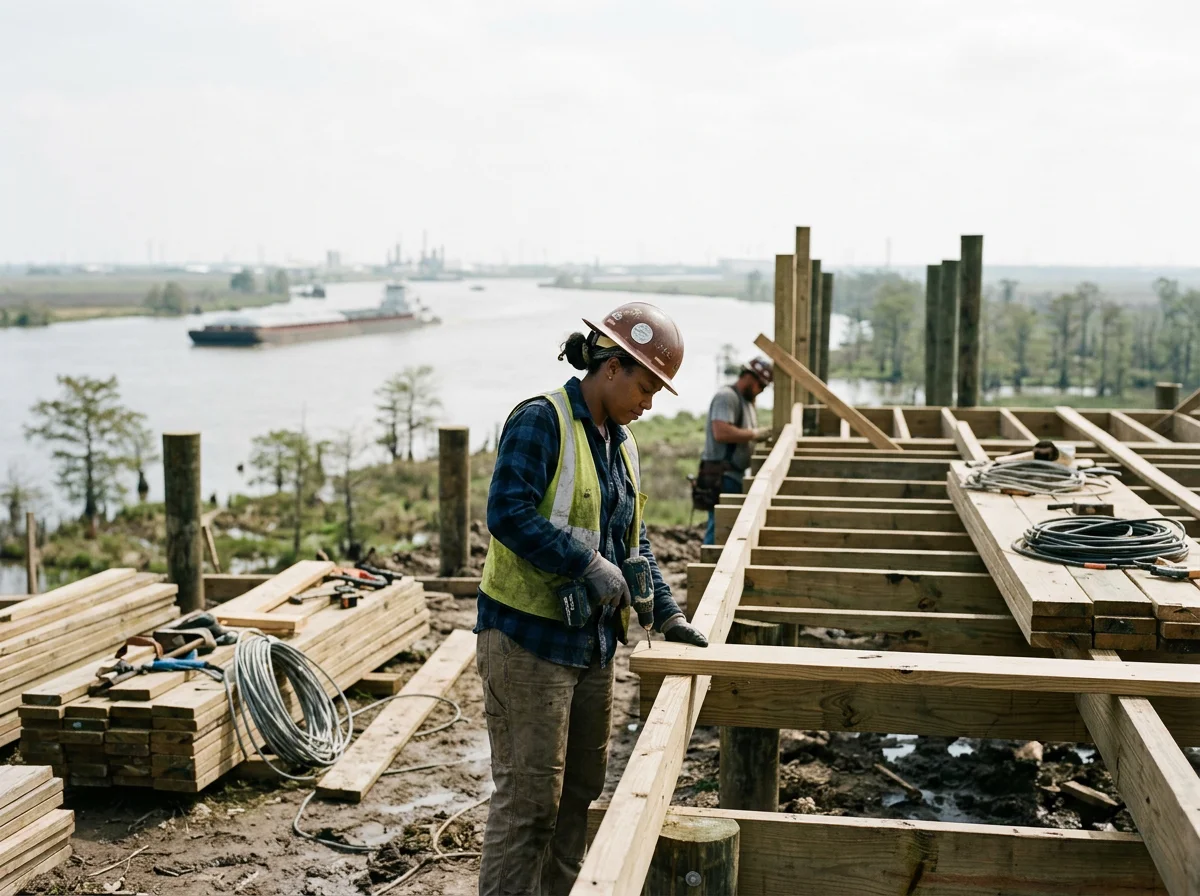
Preliminary federal data show 153,400 construction jobs in October. A separate industry analysis warns that 12 major projects could need nearly 42,000 construction workers at peak in 2028.
Louisiana’s construction workforce is expanding as the state prepares for a wave of industrial and technology projects, but new estimates suggest demand for skilled labor could outpace the available workforce in several regions.
Preliminary October employment data from the U.S. Bureau of Labor Statistics show 153,400 construction jobs in Louisiana, up from 135,800 in October 2025—an increase of 17,600 jobs, or roughly 13%. The preliminary figures are subject to revision. Louisiana’s growth rate was the highest among states in a comparison published Sunday by The Vermilion Times using federal employment data.
Leaders for a Better Louisiana estimates that 12 large industrial and technology projects could require nearly 42,000 construction workers at peak demand in mid-2028. The projects represent approximately $282 billion in announced investment, according to the group’s analysis, and are projected to generate about 7,550 permanent jobs once operational.
The projected construction demand would equal roughly half of Louisiana’s existing industrial construction workforce, estimated at about 85,000 workers. The analysis expects project-related construction employment to grow from around 17,000 now to nearly 42,000 by mid-2028.
Lafayette, Lake Charles and Monroe are expected to face the greatest regional pressure. The three areas account for about 81% of projected peak demand but have only 17% of Louisiana’s existing industrial construction workforce. Leaders for a Better Louisiana estimates that, even if every industrial construction worker in those regions were available for the projects, the combined shortfall could approach 19,000.
The projects span energy, manufacturing and technology, including SpaceX’s proposed Starbase Louisiana development in Vermilion Parish, LNG projects in southwest Louisiana, Meta’s Hyperion data center in north Louisiana, Hyundai Steel and other major industrial expansions.
The mix of work makes the labor challenge more than recruiting additional workers. Data centers require electricians and cooling-system trades, LNG construction depends heavily on pipefitters and related crafts, and large industrial projects also need carpenters, welders and equipment operators. The report identifies gaps in several trades, including carpentry, while noting growth in electrician credentials in recent years.
The forecast is not a guarantee that every announced project will proceed on schedule or use the exact number of workers projected. Construction schedules, investment decisions and contractor plans can change. But the figures underscore a practical challenge for Louisiana: turning announced investment into construction progress will require a larger, trained workforce, coordination between employers and training providers, and communities prepared for housing, traffic and service demands that accompany large job sites.
Sources
U.S. Bureau of Labor Statistics, Louisiana Economy at a Glance — October 2026 preliminary data
Leaders for a Better Louisiana, analysis of 12 major projects and construction workforce demand
10/12 Industry Report, Nov. 18, 2026 — estimated 42,000 construction workers needed
The Vermilion Times, Nov. 22, 2026 — October construction employment comparison