Posts tagged #seafood

New Federal Seafood Strategy Could Give Louisiana Shrimpers and Processors New Financing, Labeling Tools

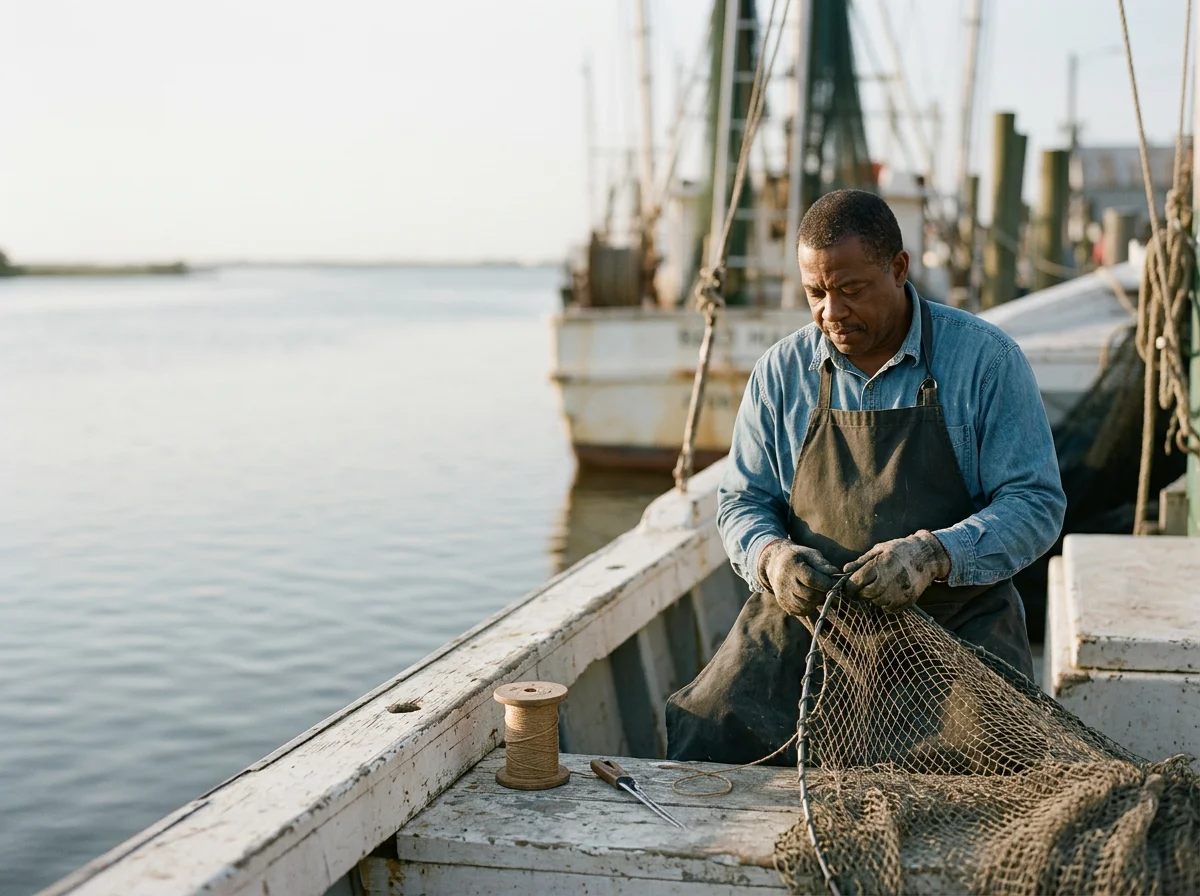
BATON ROUGE — A new federal seafood strategy could give Louisiana’s commercial fishing industry access to financing and marketing tools that have historically been more closely associated with agriculture, including a loan program offering up to $175 million per borrower for seafood-processing projects.

The Trump administration announced the America First Seafood Strategy on October 23, pairing it with at least $5 billion in guaranteed lending through the U.S. Department of Agriculture’s Strengthening Processing for U.S. Ranchers program. The expanded program now includes seafood processing alongside meat and poultry.

For Louisiana, the timing is notable. Gulf shrimpers, crabbers, oyster businesses and seafood processors have spent years arguing that imported seafood, rising operating costs and limited domestic processing capacity are eroding the economics of an industry deeply tied to coastal communities.

Under the new USDA structure, participating lenders can receive a 90 percent federal guarantee on eligible loans. Individual borrowers may receive financing of up to $175 million, and loans may allow a two-year deferral of principal and interest payments. Eligible borrowers include businesses, cooperatives, nonprofits, tribes and state or local government organizations.

The program is not a $5 billion grant fund. The federal government is guaranteeing qualifying private loans, which can make lenders more willing to finance expensive processing plants, cold storage, equipment and other infrastructure. Borrowers remain responsible for repayment.

The broader federal strategy also calls for a voluntary “U.S.-Caught Seafood” designation intended to help consumers identify seafood harvested by American fishermen on U.S.-flagged vessels. Federal agencies say they will also expand government purchasing opportunities for domestic seafood and launch an “Eat American Seafood” marketing campaign.

Those measures overlap with a direction Louisiana has already taken at the state level. A Louisiana seafood-labeling law that took effect August 1 strengthened disclosure requirements involving imported and commingled seafood, with the goal of making it harder to market foreign product as Louisiana or domestic seafood.

The federal strategy also calls for stronger enforcement against seafood fraud, mislabeling and illegal, unreported and unregulated fishing. NOAA says it intends to use existing import-monitoring authorities and improve coordination among agencies responsible for policing seafood entering the United States.

For Louisiana processors, the financing component may prove more consequential than the label. Domestic seafood businesses often operate with aging plants, expensive refrigeration systems and highly seasonal cash flow. Access to federally backed capital could help some businesses modernize or expand, although eligibility and lender underwriting will determine who can actually use the program.

The strategy also directs federal agencies to reduce barriers to investment in docks, working waterfronts, cold and wet storage, shipyards and processing facilities. Those priorities could be especially relevant in south Louisiana communities where commercial fishing infrastructure competes with residential development, storm damage and other coastal pressures.

None of the new measures guarantees higher dockside prices for Louisiana fishermen, nor does the strategy eliminate competition from imported shrimp and other seafood. Its significance is that federal policy is increasingly treating domestic seafood as an agricultural and food-security industry rather than solely as a fisheries-management issue.

For Louisiana, where the seafood economy stretches from boats and docks to processors, wholesalers, restaurants and retailers, the next test will be whether those federal tools translate into investment on the Gulf Coast rather than remaining programs that exist primarily on paper.

Disclosure: Gov. Jeff Landry is a current advertiser with Cajun Conservatism. His administration’s earlier seafood-labeling policy is referenced for context. The advertising relationship did not determine the decision to cover this development and provided no editorial control over this article.

Sources

USDA — $5 Billion SPUR Guaranteed Loan Program, Oct. 23, 2026

NOAA — America First Seafood Strategy, Oct. 23, 2026

NOAA Fisheries — Strategy details and U.S.-Caught Seafood designation, Oct. 23, 2026

White House — America First Seafood Strategy fact sheet, Oct. 23, 2026
Posted on October 26, 2026 and filed under Louisiana.

Obama Signs Into Law H.R. 644, the Trade Facilitation and Trade Enforcement Act

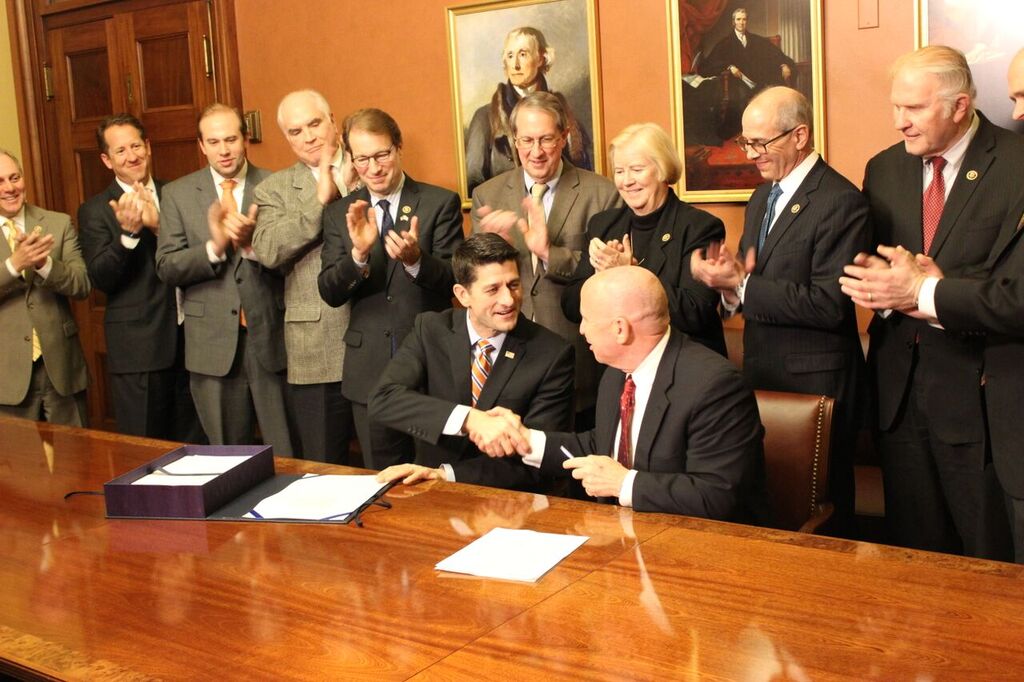
Enrollment ceremony for the bill to officially send it to the President for signature

Enrollment ceremony for the bill to officially send it to the President for signature

President Barack Obama has signed into law H.R. 644, which will accomplish the following:

  • Create a dedicated unit within U.S. Customs and Border Patrol (CBP) to prevent and investigate trade evasion
  • Create a CBP point of contact for private sector trade evasion allegations with the authority to direct evasion investigations and the duty to inform interested parties about the status of investigations
  • Require CBP and Commerce to establish procedures to ensure maximum cooperation and communication in order to quickly, efficiently, and accurately investigate allegations of trade evasion
  • Direct CBP to enter into agreements with foreign countries to enable proactive investigation overseas
  • Require CBP to annually report to Congress on all of the agency’s activities to combat trade evasion

The bill also contains the PROTECT Act safeguarding Louisiana seafood from illegally dumped foreign product.  The Act was shepherded through the Congress by Congressman Charles Boustany, LA-03.

The following was said regarding passage of this bill:

Boustany: “It’s simple – if foreign competitors want to sell in our markets, they need to play by our rules. The PROTECT Act provides necessary safeguards to ensure no foreign entity can undercut American businesses and jobs in our own backyard. This is a monumental win for Louisiana. I’ll keep fighting to ensure our trade laws are fair and work to support American commerce.”

John Williams, Executive Director of the Southern Shrimp Alliance: “Simply stated, this would not have happened without the intensive and persistent efforts of Congressman Boustany.  While the Congressman has been an effective champion of the US shrimp industry for many years, the enactment of this legislation may be the most far reaching and beneficial of all.  Every year illegal shrimp imports defraud the federal government and American taxpayers of tens of millions of dollars in unpaid duties.  They have also seriously injured our shrimp fishermen and the economies of coastal communities in Louisiana and throughout the Gulf and South Atlantic.  This legislation will substantially strengthen the ability of US Customs and Border Protection and other federal agencies to investigate, prosecute, and end these harmful fraudulent activities.”

Another Reason to Support Shrimpers in Louisiana

Photo source: Farmer's Almanac

Photo source: Farmer's Almanac

In a recent report, it was found that forced labor is being used in Thailand to supply companies such as Wal-Mart and Red Lobster with shrimp.  Per this report, the conditions were what amounted to modern slavery:

"The Gig Peeling Factory, nearly 100 Burmese laborers were trapped, most working for almost nothing. They spent 16 hours a day with their aching hands in ice water, ripping the guts, heads, tails and shells off shrimp. One girl was so tiny she had to stand on a stool to reach the peeling table. Some workers had been there for months, even years. Always, someone was watching."

If there is any doubt why we need to support our local seafood industries in South Louisiana, this should clear it all up.  As a proud Cajun and native of Iberia Parish, I can offer the following alternatives for purchasing of Louisiana seafood in this area.

South Louisiana Seafood Markets

Posted on December 16, 2015 and filed under Louisiana.

Charles Boustany on PROTECTing Louisiana Seafood

Photo source: AMAC

Photo source: AMAC

Rep. Charles Boustany (LA-3) has recently came out in support of the PROTECT Act and the impact it would have on the seafood industry in the State of Louisiana.  The PROTECT Act, according to a recent email release by Boustany, would do the following:

  • Create a dedicated unit within U.S. Customs and Border Patrol (CBP) to prevent and investigate trade evasion.
  • Create a CBP point of contact for private sector trade evasion allegations with the authority to direct evasion investigations and the duty to inform interested parties about the status of investigations.
  • Require CBP and the U.S. Department of Commerce to establish procedures to ensure maximum cooperation and communication in order to quickly, efficiently, and accurately investigate allegations of trade evasion.
  • Direct CBP to enter into agreements with foreign countries to enable proactive investigation overseas.
  • Require CBP to annually report to Congress on all of the agency's activities to combat trade evasion.

The bill is now headed to a conference committee between the House and Senate.


Posted on June 16, 2015 and filed under Louisiana.