New Federal Seafood Strategy Could Give Louisiana Shrimpers and Processors New Financing, Labeling Tools

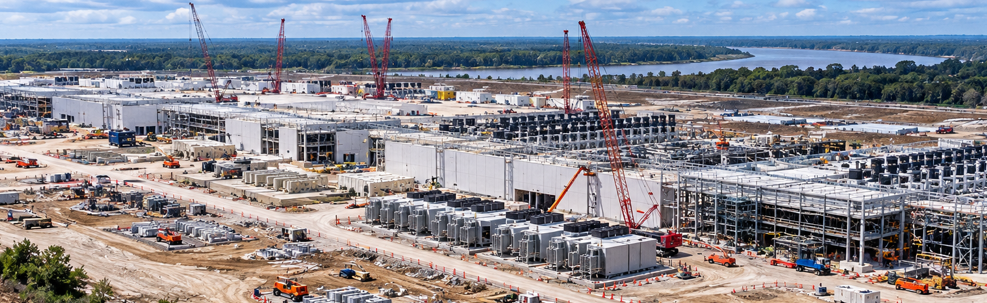
BATON ROUGE — A new federal seafood strategy could give Louisiana’s commercial fishing industry access to financing and marketing tools that have historically been more closely associated with agriculture, including a loan program offering up to $175 million per borrower for seafood-processing projects.

The Trump administration announced the America First Seafood Strategy on October 23, pairing it with at least $5 billion in guaranteed lending through the U.S. Department of Agriculture’s Strengthening Processing for U.S. Ranchers program. The expanded program now includes seafood processing alongside meat and poultry.

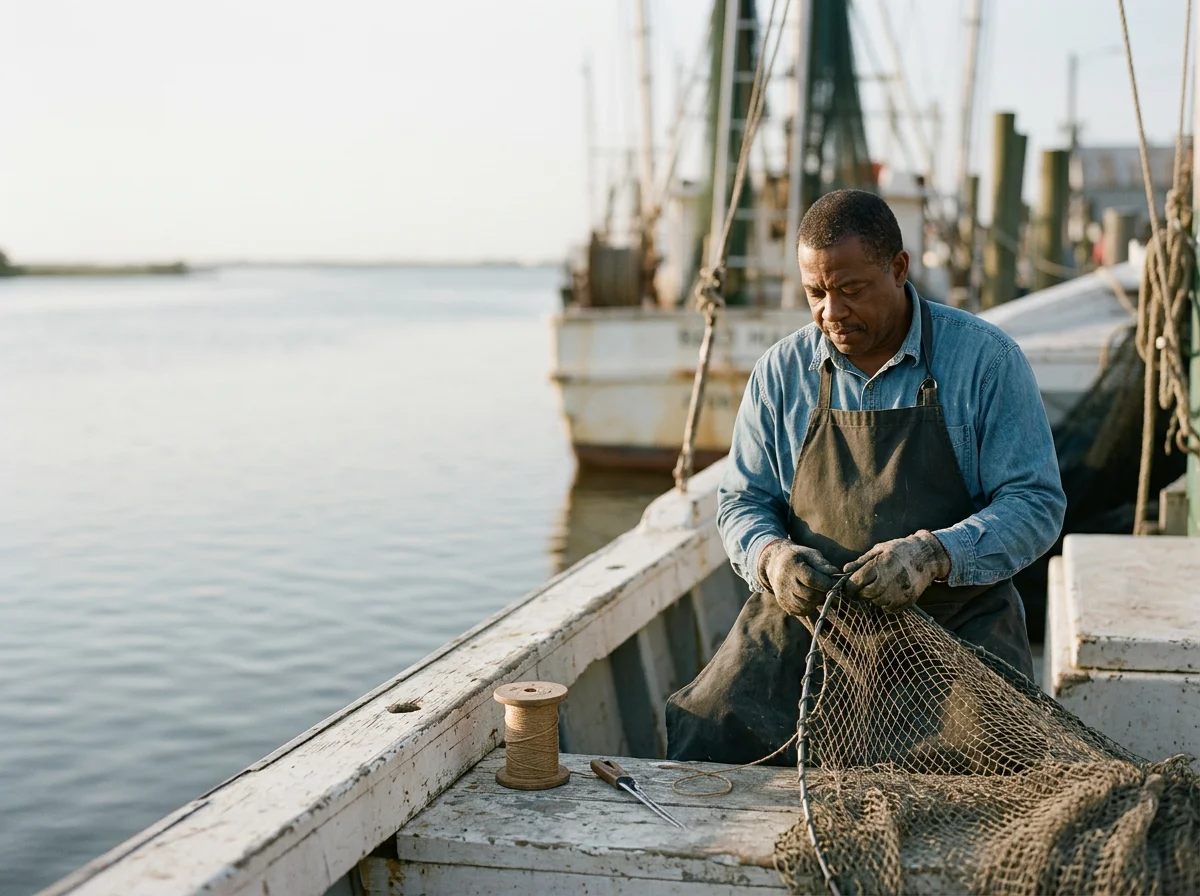
For Louisiana, the timing is notable. Gulf shrimpers, crabbers, oyster businesses and seafood processors have spent years arguing that imported seafood, rising operating costs and limited domestic processing capacity are eroding the economics of an industry deeply tied to coastal communities.

Under the new USDA structure, participating lenders can receive a 90 percent federal guarantee on eligible loans. Individual borrowers may receive financing of up to $175 million, and loans may allow a two-year deferral of principal and interest payments. Eligible borrowers include businesses, cooperatives, nonprofits, tribes and state or local government organizations.

The program is not a $5 billion grant fund. The federal government is guaranteeing qualifying private loans, which can make lenders more willing to finance expensive processing plants, cold storage, equipment and other infrastructure. Borrowers remain responsible for repayment.

The broader federal strategy also calls for a voluntary “U.S.-Caught Seafood” designation intended to help consumers identify seafood harvested by American fishermen on U.S.-flagged vessels. Federal agencies say they will also expand government purchasing opportunities for domestic seafood and launch an “Eat American Seafood” marketing campaign.

Those measures overlap with a direction Louisiana has already taken at the state level. A Louisiana seafood-labeling law that took effect August 1 strengthened disclosure requirements involving imported and commingled seafood, with the goal of making it harder to market foreign product as Louisiana or domestic seafood.

The federal strategy also calls for stronger enforcement against seafood fraud, mislabeling and illegal, unreported and unregulated fishing. NOAA says it intends to use existing import-monitoring authorities and improve coordination among agencies responsible for policing seafood entering the United States.

For Louisiana processors, the financing component may prove more consequential than the label. Domestic seafood businesses often operate with aging plants, expensive refrigeration systems and highly seasonal cash flow. Access to federally backed capital could help some businesses modernize or expand, although eligibility and lender underwriting will determine who can actually use the program.

The strategy also directs federal agencies to reduce barriers to investment in docks, working waterfronts, cold and wet storage, shipyards and processing facilities. Those priorities could be especially relevant in south Louisiana communities where commercial fishing infrastructure competes with residential development, storm damage and other coastal pressures.

None of the new measures guarantees higher dockside prices for Louisiana fishermen, nor does the strategy eliminate competition from imported shrimp and other seafood. Its significance is that federal policy is increasingly treating domestic seafood as an agricultural and food-security industry rather than solely as a fisheries-management issue.

For Louisiana, where the seafood economy stretches from boats and docks to processors, wholesalers, restaurants and retailers, the next test will be whether those federal tools translate into investment on the Gulf Coast rather than remaining programs that exist primarily on paper.

Disclosure: Gov. Jeff Landry is a current advertiser with Cajun Conservatism. His administration’s earlier seafood-labeling policy is referenced for context. The advertising relationship did not determine the decision to cover this development and provided no editorial control over this article.

Sources

USDA — $5 Billion SPUR Guaranteed Loan Program, Oct. 23, 2026

NOAA — America First Seafood Strategy, Oct. 23, 2026

NOAA Fisheries — Strategy details and U.S.-Caught Seafood designation, Oct. 23, 2026

White House — America First Seafood Strategy fact sheet, Oct. 23, 2026

Posted on October 26, 2026 and filed under Louisiana.

Johnson, Scalise and Higgins Should Put the AI Chip Limits in the Defense Bill

Should the best AI chips in the world be for sale to China? Most people would say no without thinking twice. Right now, a lobbying fight is going on over exactly that question.

Congress is putting together this year's defense bill. One idea on the table is the AI OVERWATCH Act, a bipartisan bill that would limit sales of the most advanced AI chips to countries like China.

The Tech Lobby wants it left out. On September 3, five tech industry trade groups sent a letter asking Congress to "reject the addition" of AI OVERWATCH. Speaker Mike Johnson and Majority Leader Steve Scalise were among the people copied.

To be fair, these are trade associations, not named companies. They also say their members want to keep the most advanced American technology out of the hands of our adversaries. I'm glad to hear it. But they object to putting limits in law, and they complain that the limits would last "at least eighteen months," which they call "an eternity" in AI.

I see it the other way. Rules that run out every few months get argued over again and again. If the goal is to keep this technology away from an adversary, the protection should be built to last.

China is not a normal customer. The U.S. State Department describes China's "military-civil fusion" strategy as removing the barriers between China's civilian companies and its military. The same paper says the Chinese Communist Party believes the first country to apply AI to next generation warfare will achieve military dominance.

That is our own government talking, not me. If China's leaders see AI as the key to winning a war, then the chips that run AI are not just another product. A chip sold to a Chinese company can end up helping the Chinese military, and we would be taking that risk on purpose.

I'm a Marine from Marrero, Louisiana, and I get why companies want to sell what they make. But sales are one question and national security is another, and when they pull in different directions, security should win.

AI OVERWATCH is not in the defense bill yet, and nobody should assume it gets there on its own. The people lobbying against it certainly aren't assuming that.

So my ask is for limits that last, in the final defense bill. Speaker Mike Johnson of Louisiana's 4th District, Majority Leader Steve Scalise of the 1st District, and Rep. Clay Higgins of the 3rd District, who sits on the House Armed Services Committee, should make sure AI OVERWATCH is in it. Louisiana is counting on them.

Quin Bates 
Marrero, Louisiana

Posted on October 26, 2026 and filed under AI, Clay Higgins, Mike Johnson, Steve Scalise.

McNeese LNG Safety Center Gets $5 Million Federal Boost as Louisiana’s Export Industry Expands

LAKE CHARLES, La. — Louisiana’s growing role in the global liquefied-natural-gas industry is being matched by a new federal investment in the research, safety and workforce infrastructure surrounding it.

U.S. Sen. John Kennedy toured the National Center of Excellence for Liquefied Natural Gas Safety at McNeese State University this week and highlighted $5 million in fiscal year 2026 federal funding for the center.

The center opened in April after the U.S. Department of Transportation selected McNeese in May 2025 to host the national program. Kennedy had pushed for creation of the center through the PIPES Act of 2020 and later supported funding for its work.

The center brings together McNeese, the University of Louisiana at Lafayette, Southern University, federal agencies and industry partners. Its mission includes LNG safety research, workforce development and technical work intended to improve how the rapidly expanding industry operates.

That mission is particularly relevant in southwest Louisiana, which has become one of the most concentrated LNG corridors in the world. Operating and planned export terminals in Cameron and Calcasieu parishes represent tens of billions of dollars in capital investment and connect Louisiana natural gas to customers overseas.

The federal investment is small compared with the cost of an LNG terminal, but it addresses a different part of the industry: the expertise required to operate, regulate and improve those facilities safely.

Louisiana’s LNG expansion creates demand for engineers, operators, maintenance personnel, safety professionals, researchers and technicians. A national center located in Lake Charles gives Louisiana universities an opportunity to connect academic programs and applied research directly to an industry already operating in their backyard.

The center can also serve as a bridge between federal regulators and private companies. LNG facilities operate under extensive federal safety, pipeline, maritime and environmental requirements, and research into risk, equipment performance and emergency response can influence future standards and operating practices.

Kennedy’s office said the center’s work will focus on improving LNG safety, advancing research and strengthening workforce development. The senator toured the facility with LNG industry leaders and the presidents of McNeese and UL Lafayette.

For Louisiana, the strategic value is straightforward. The state is already competing aggressively for the physical infrastructure of the energy industry — export terminals, pipelines, storage caverns and power generation. The McNeese center is an attempt to capture more of the intellectual and workforce infrastructure that accompanies those investments.

That could matter as LNG projects become larger and more technically complex. A state that trains the workers, conducts the research and helps develop safety practices can potentially capture economic benefits beyond construction and plant operations.

The $5 million appropriation does not guarantee those outcomes. But it gives a relatively new national center resources to build research and training programs at a moment when southwest Louisiana’s LNG industry is continuing to expand.

Sources

U.S. Sen. John Kennedy — LNG Center of Excellence tour, Oct. 22, 2026

Posted on October 25, 2026 and filed under Louisiana, Oil and Gas.

SpaceX Gets Early Access to Pecan Island Property as UL System Clears Lease Ahead of Planned Sale

PECAN ISLAND, La. — SpaceX has secured a path to begin using and improving a University of Louisiana at Lafayette-owned property on Pecan Island before an anticipated purchase, giving the company another physical foothold near its planned Starbase Louisiana development in Vermilion Parish.

The University of Louisiana System Board of Supervisors approved the arrangement Thursday. It covers about five acres at the former Pecan Island High School, which closed after Hurricane Rita damaged the campus in 2005. UL Lafayette obtained the property through a donation last year.

Under the structure approved by the board, UL Lafayette will lease the site to its affiliated nonprofit, Ragin’ Cajun Facilities Inc., for $1 per year. The nonprofit will then sublease the property to SpaceX. Rather than paying conventional cash rent while improvements are underway, SpaceX is expected to provide improvements to the site and its buildings.

University officials said the interim lease solves a timing problem: SpaceX wants access to the property now, while the separate legal and administrative process required for a sale is expected to continue into next year. If the improvements are delayed, the agreement calls for SpaceX to pay fair-market rent until work begins.

The permitted uses are broad. The lease allows offices, engineering and research activity, personnel lodging, training, warehousing, equipment staging, fabrication and light industrial work, communications equipment, vehicle maintenance, emergency power generation and other support functions.

Those uses make the former school potentially much more than a temporary office. They could allow the property to serve as a support hub for the enormous spaceport SpaceX plans along the Vermilion Parish coast.

The agreement does not itself transfer ownership. University officials said the institution expects either to receive fair-market rent if improvements are delayed or proceeds from a future sale. A purchase price and final sale terms have not been publicly established.

The arrangement has also drawn questions because UL Lafayette is working through a budget deficit. Critics have questioned why property would initially be leased for a nominal amount while the university is cutting costs. University officials argue that the improvements and expected future sale provide the economic consideration behind the deal.

Another unanswered question involves exactly what SpaceX will build or renovate. The detailed improvement schedule was not included in the public board materials reviewed by news organizations, and requests have been made for those records.

The property’s history adds another layer. It had been associated with wildlife and coastal-preservation purposes, while the new lease allows a wide range of industrial and operational uses. How those interests will coexist could become part of the broader debate surrounding Starbase Louisiana.

The lease is a meaningful step because it moves the SpaceX project from broad economic-development announcements toward site-level activity involving specific buildings and land. It follows other signs of advancement, including permitting activity, early hiring and federal discussions over future spaceport and launch-corridor policy.

SpaceX and Louisiana officials have described Starbase Louisiana as a potential $100 billion investment capable of supporting thousands of jobs. Those figures remain projections tied to a project that still faces permitting, environmental review, construction and commercial execution.

For Acadiana, the immediate development is simpler: SpaceX now has an approved mechanism to get onto a UL Lafayette property in Pecan Island and begin preparing it while the parties work toward a possible sale.

Disclosure: Gov. Jeff Landry is a current advertiser with Cajun Conservatism. The advertising relationship did not determine the decision to cover this development and provided no editorial control over this article.

Sources

Acadiana News First — UL System lease approval, Oct. 22, 2026

Louisiana Illuminator — SpaceX lease and anticipated purchase, Oct. 23, 2026

Louisiana Economic Development — Starbase Louisiana announcement

Posted on October 25, 2026 and filed under Louisiana, SpaceX.

Emergency Oil From West Hackberry Heads to Lake Charles Refinery After Crude Supply Disruption

LAKE CHARLES, La. — The federal government has authorized an emergency exchange of as much as 400,000 barrels of crude oil from Louisiana’s West Hackberry Strategic Petroleum Reserve site to keep crude flowing to the Phillips 66 Lake Charles refinery after a temporary supply disruption.

The U.S. Department of Energy announced the move Friday, saying the crude will be delivered immediately from West Hackberry to offset interruptions affecting deliveries to the refinery and help maintain production of gasoline, diesel and other transportation fuels serving Louisiana and surrounding markets.

The Lake Charles refinery can process roughly 264,000 barrels of crude per day, making the authorized exchange equal to about a day and a half of the facility’s nameplate crude-processing capacity. The actual operational impact will depend on the timing and extent of the supply disruption.

This is an exchange rather than a permanent sale from the Strategic Petroleum Reserve. Under the agreement, Phillips 66 must return the borrowed crude to the reserve along with additional premium barrels. DOE says that structure allows the government to respond to the immediate disruption while ultimately increasing the amount of oil returned to the reserve.

The crude will come from the West Hackberry storage site in Cameron Parish, one of the underground salt-cavern facilities that make up the Strategic Petroleum Reserve along the Gulf Coast. Its proximity to Louisiana’s refining and pipeline network allows the reserve to respond to disruptions affecting one of the country’s most concentrated refining corridors.

DOE did not identify the precise cause of the temporary crude-delivery disruption in its announcement. Phillips 66 confirmed the planned delivery but has said it does not expect the issue to affect refinery operations.

The action comes during a period of heightened global energy-market volatility, increasing the importance of keeping Gulf Coast refineries supplied. Louisiana refineries do not simply serve local motorists; they are part of a regional and national fuel system that moves refined products through pipelines, marine terminals and other distribution networks.

Emergency SPR exchanges have been used before when hurricanes, pipeline problems and other disruptions threaten refinery supply. Unlike a broad release intended primarily to influence national oil prices, Friday’s action is targeted at a specific refinery and a specific crude-delivery interruption.

That distinction is important. The authorization does not indicate that Louisiana is running out of gasoline or diesel, and DOE has not announced a general fuel emergency in the state. The purpose is preventative: keep enough crude moving to the Lake Charles refinery so the temporary upstream problem does not become a larger downstream fuel-supply problem.

The episode also highlights southwest Louisiana’s unusual role in American energy security. The same region contains major refineries, LNG export terminals, petrochemical facilities, pipelines and one of the federal government’s enormous emergency crude-oil storage sites.

For Louisiana consumers, the immediate takeaway is not a prediction of higher or lower pump prices. It is that federal officials are using the Strategic Petroleum Reserve as designed — as physical backup inventory capable of moving crude into a refinery when ordinary supply routes are temporarily disrupted.

Sources

U.S. Department of Energy — SPR exchange for Phillips 66 Lake Charles refinery, Oct. 23, 2026

Reuters — emergency SPR exchange for Lake Charles refinery, Oct. 23, 2026

Posted on October 24, 2026 and filed under Louisiana, Oil and Gas.

QatarEnergy Eyes Up to 3 Million Tons a Year From Louisiana LNG as Global Gas Market Tightens

CALCASIEU PARISH, La. — One of the world’s largest liquefied natural gas suppliers is in talks to buy a major block of future production from Woodside Energy’s Louisiana LNG project, a potential deal that would strengthen the commercial foundation of the multibillion-dollar export terminal now under construction near Lake Charles.

QatarEnergy is negotiating to purchase as much as 3 million metric tons of LNG annually from the project, according to Reuters, which cited people familiar with the discussions. A potential agreement could run for 15 to 20 years.

Neither QatarEnergy nor Woodside has announced a final contract, and Woodside declined to comment on market speculation. The negotiations therefore should not be treated as a completed sale. But the scale of the talks is significant for a project designed to produce 16.5 million metric tons of LNG annually in its initial development.

Louisiana LNG, formerly known as Driftwood LNG, is being built on the Calcasieu River south of Lake Charles. Woodside acquired Tellurian in 2024 and later moved the project into construction, positioning it as one of the largest new LNG developments on the Gulf Coast.

A 3-million-ton annual commitment would represent roughly 18 percent of the project's planned initial production capacity. Long-term sales contracts are closely watched in the LNG industry because they can provide predictable revenue and help support financing for capital-intensive export facilities.

The negotiations are occurring against an unusual global backdrop. Disruptions affecting Middle East gas and shipping have tightened LNG supplies and pushed buyers to seek additional U.S. cargoes. Qatar, normally one of the world’s dominant LNG exporters, has itself been buying American LNG to help meet customer commitments.

That shift illustrates why Louisiana’s LNG buildout has implications far beyond the Gulf Coast. Export terminals in Cameron, Calcasieu and Plaquemines parishes increasingly function as part of the global energy-security system, capable of redirecting U.S. natural gas toward Europe, Asia and other markets when supplies elsewhere are disrupted.

QatarEnergy already has long-term exposure to U.S. LNG. Reuters reports that the company has a 4-million-ton-per-year supply agreement with Cheniere Energy divided between Cheniere’s Louisiana and Texas facilities and is also in advanced discussions for additional supply from Venture Global.

For Woodside, landing another large buyer would help address a central commercial challenge: converting the Louisiana project’s enormous future production capacity into contracted sales. The company has continued pursuing customers and partners as construction advances.

The pricing structure is also part of the negotiations. Reuters reported that Louisiana LNG has been seeking liquefaction fees above $2.50 per million British thermal units while offering buyers flexibility that can command a premium. Exact commercial terms remain confidential and could change before any agreement is signed.

The story for Louisiana is therefore not that Qatar has committed to buying the gas. It has not — at least not publicly. The development is that one of the most experienced LNG companies in the world is negotiating for a substantial long-term share of output from a Louisiana terminal already under construction.

If a deal is completed, it would add another international customer to Louisiana’s growing LNG network and further connect southwest Louisiana’s industrial economy to energy markets thousands of miles away.

Sources

Reuters — QatarEnergy in talks for Louisiana LNG supply, Oct. 23, 2026

Woodside Energy — Louisiana LNG project information

Posted on October 24, 2026 and filed under Energy, Louisiana, Oil and Gas.

Blake Miguez Launches New “Tired of It” TV Ad as LA-06 Race Enters Final Stretch

BATON ROUGE, La. — State Sen. Blake Miguez is launching another television advertisement as the campaign for Louisiana’s 6th Congressional District moves into its final stretch.

The new campaign ad, titled “Tired of It,” began airing this week in the Baton Rouge congressional race. The latest spot comes as Miguez and his opponents intensify their efforts to reach voters ahead of the November election.

Miguez Keeps Up Television Push

The new advertisement represents another effort by Miguez to get his message directly in front of voters as the campaign enters its closing weeks.

The 6th District contest has attracted significant attention and outside involvement, with candidates and political groups spending money to influence the outcome. Club for Growth PAC endorsed Miguez earlier this year, while Club for Growth Action has also become involved in the race.

Cajun Conservatism previously reported on a reported $1 million television campaign associated with Club for Growth Action targeting State Sen. Rick Edmonds with an advertisement titled “Sellout.” The latest “Tired of It” advertisement comes directly from the Miguez campaign.

Final Push Toward November

With Election Day approaching, television advertising, campaign appearances and competing messages are likely to become increasingly important as candidates make their final pitches to voters.

For Miguez, the release of “Tired of It” represents another step in that effort. The campaign is clearly looking to keep Miguez’s message in front of voters during the closing stretch of what has become one of Louisiana’s most closely watched congressional contests.

Watch the Ad

Blake Miguez for Congress — “Tired of It”

Posted on October 24, 2026 and filed under Blake Miguez.

SpaceX Moves Into Pecan Island School as Louisiana Project Takes Another Step Forward

Former Pecan Island High School property will be made available to SpaceX as the company continues building its presence along Louisiana’s coast.

PECAN ISLAND, La. — SpaceX’s move into Vermilion Parish continues to become more tangible, with the former Pecan Island High School now set to play a role in the company’s growing Louisiana operation.

The University of Louisiana System Board of Supervisors has approved a lease arrangement that will allow SpaceX to begin making improvements to the former school property.

The move is another significant development for a project that could have a major economic impact on Vermilion Parish and the Acadiana region.

SpaceX Gets Access to Former School

Under the approved arrangement, the University of Louisiana at Lafayette will lease the property to a university-affiliated nonprofit organization, which will then sublease it to SpaceX.

The arrangement allows SpaceX to begin using and improving the property while a separate process that could eventually result in the company purchasing the site continues.

The initial lease calls for nominal rent, with the value of improvements made by SpaceX serving as part of the consideration for use of the property.

The former school property is located along Louisiana Highway 82 in Pecan Island.

Exactly how SpaceX ultimately intends to use the facility has not been fully detailed publicly. Potential uses referenced in connection with the property have included office space, personnel lodging, storage and fabrication.

SpaceX Presence Becoming More Visible

The agreement is important because SpaceX’s plans in southwest Louisiana are moving beyond announcements and into physical development.

The company has already been working with state and local officials as it prepares for operations in the Pecan Island area.

SpaceX representatives have also met with local residents to discuss the project and answer questions about what the company's arrival could mean for the small coastal community.

The former school now gives the company an established facility near its planned operations that can potentially support workers, equipment and other needs.

Major Opportunity — And Questions — for Acadiana

SpaceX’s arrival could represent a significant economic opportunity for Vermilion Parish and the surrounding Acadiana region.

A project of this size could mean construction work, permanent jobs, demand for local contractors and suppliers, additional housing needs and increased business for communities throughout south Louisiana.

At the same time, residents have raised legitimate questions about infrastructure, environmental impacts, access to hunting and fishing areas and how large-scale industrial development could affect Pecan Island’s traditional way of life.

Those issues will continue to deserve attention as additional details about the project become public.

What is becoming increasingly clear, however, is that SpaceX’s Louisiana plans are moving forward.

The approval involving the former Pecan Island High School is another tangible step in that process.

For Acadiana, the conversation is quickly changing from whether SpaceX will establish a significant presence in south Louisiana to just how large that presence will ultimately become.

Sources

NOLA.com / The Advocate — Original Report

Acadiana News First — UL System Approves SpaceX Lease Agreement

Louisiana Illuminator — SpaceX and Pecan Island Development

Posted on October 23, 2026 and filed under Louisiana, Pecan Island, SpaceX.

Meta Construction Boom Spreads Across Northeast Louisiana as New Report Projects 4,200 More Monroe-Area Jobs

MONROE, La. — The economic impact of Meta’s massive Richland Parish data-center project is spreading well beyond the construction site, with new regional figures showing rising sales-tax collections across northeast Louisiana and economists projecting thousands of additional jobs for the Monroe area over the next two years.

Business and government leaders gathered this week for the Northeast Louisiana Economic Summit, where speakers presented updated data on the region’s growth. The central message was that the Meta project is producing a much broader construction-era impact than the permanent employment number alone suggests.

Economist Loren Scott projected that the Monroe metropolitan area could add approximately 4,200 jobs during the next two years, positioning it among Louisiana’s faster-growing regions. The forecast reflects not only direct activity at the data-center campus but also construction, suppliers, retail spending, housing demand and other businesses benefiting from the influx of workers and investment.

The effect is also showing up in public revenue. Regional economic-development officials say sales-tax collections have increased across multiple northeast Louisiana parishes as workers and contractors spend money on lodging, food, fuel, equipment and other goods and services.

That regional spillover is important because the Meta campus itself is located in Richland Parish, a rural parish that historically has not generated economic activity on this scale. The project has created demand for workers and businesses throughout the surrounding region rather than inside a single parish boundary.

The construction phase, however, will not last forever. Meta has said its Louisiana campus will support more than 7,500 workers at peak construction, while the completed development is expected to employ about 1,000 permanent workers. That means northeast Louisiana should expect some construction-related employment and spending to decline as the campus moves toward full operation.

Scott told summit participants that the region would still be substantially better positioned after construction than it was before the project began, even though the extraordinary number of temporary construction jobs will eventually fall.

That transition may be the most important economic question surrounding Louisiana’s data-center boom. Large projects can produce dramatic short-term increases in sales-tax collections, hotel occupancy and construction employment. The longer-term benefit depends on whether communities convert that period of intense activity into permanent businesses, workforce skills, infrastructure and additional investment.

Louisiana Delta Community College is already attempting to build one piece of that bridge through its accelerated Data Center Technician program. The school’s first class produced job offers for all 11 graduates, and enrollment demand has since grown as residents pursue technical positions tied to the emerging industry.

The Meta project is also forcing local governments to think differently about infrastructure and growth. Housing, roads, utilities, emergency services and workforce availability can all become pressure points when thousands of workers arrive in a relatively short period.

For northeast Louisiana, the latest economic figures offer evidence that the data-center investment is doing more than creating activity behind the gates of one construction site. Money is circulating across the region now. The harder test will come later: how much of that growth remains after the construction workforce begins to leave.

That question matters beyond Richland Parish. Louisiana is pursuing data centers and other power-intensive technology projects across the state, making northeast Louisiana an early case study in what communities gain — and what they must prepare for — when a multibillion-dollar project arrives at unprecedented speed.

Sources

KNOE — Northeast Louisiana Economic Summit and Meta regional impact, Oct. 22, 2026

Louisiana Economic Development — Meta AI data center investment background

Posted on October 23, 2026 and filed under Louisiana, Meta.

Louisiana Nuclear Bid Comes Into Focus as Four Areas Signal Interest in Hosting Federal Campus

BATON ROUGE — Louisiana's bid for a potentially enormous federal nuclear-industry campus is becoming more concrete, with state officials identifying four areas that have expressed interest in hosting the project and telling lawmakers that the federal government is expected to narrow the competition later this year or in early 2027.

Louisiana is one of six states now working with the U.S. Department of Energy on the Nuclear Lifecycle Innovation Campus initiative. DOE initially selected Louisiana, Idaho, Oklahoma, Tennessee and Utah in July after receiving 28 applications from 26 states; West Virginia joined the group in September.

The concept goes far beyond building another conventional nuclear power plant. DOE envisions campuses that could combine nuclear-fuel fabrication and enrichment, recycling or reprocessing of used fuel, waste management, advanced manufacturing and potentially advanced reactors and data centers.

At a Louisiana House Natural Resources Committee hearing this week, state officials provided new details about how Louisiana is approaching the competition. The Department of Conservation and Energy said St. Charles Parish, West Feliciana Parish, neighboring East Feliciana Parish and the governing authority associated with Port Fourchon have expressed interest in being considered.

Those locations reflect different pieces of Louisiana's existing energy infrastructure. St. Charles Parish is home to Entergy's Waterford 3 nuclear station, while West Feliciana Parish is home to River Bend. East Feliciana has already attracted interest in nuclear-related economic development, and Port Fourchon sits at the center of Louisiana's offshore energy network.

Louisiana's original federal pitch envisioned a multiparish network rather than a single location. State officials told lawmakers, however, that DOE now expects one primary campus location per selected state.

One of the most consequential parts of the proposal involves used nuclear fuel. State officials say Louisiana is interested in reprocessing spent fuel to recover usable uranium, rather than simply storing waste shipped into the state. They told lawmakers that any Louisiana proposal would have to address final disposition of the smaller waste stream left after reprocessing.

That distinction is likely to be central to public debate. Nuclear waste remains politically and technically difficult, and any actual fuel-cycle facility would face extensive federal licensing, environmental review and safety requirements. State officials stressed to lawmakers that Louisiana does not want to become merely a disposal site for nuclear waste generated elsewhere.

DOE says a Nuclear Lifecycle Innovation Campus could attract as much as $50 billion in capital investment, generate up to $10 billion in state and local tax revenue and create nearly 25,000 jobs. Those figures describe the potential scale of the federal initiative, not a guaranteed Louisiana investment or employment commitment.

The next federal selection could come later this year or in early 2027. Until a host agreement, site and private investment are finalized, Louisiana remains a contender rather than a confirmed winner.

Still, this week's legislative hearing marks an important shift. Louisiana's nuclear ambitions are moving from a broad economic-development pitch toward a site-selection discussion involving specific communities, existing nuclear assets and the difficult question of how a full nuclear-fuel cycle would operate in the state.

Disclosure: Gov. Jeff Landry is a current advertiser with Cajun Conservatism. The advertising relationship did not determine the decision to cover this development and provided no editorial control over this article.

Sources

U.S. Department of Energy — Nuclear Lifecycle Innovation Campuses

U.S. Department of Energy — Louisiana and other initial contenders announced July 28, 2026

Louisiana Illuminator — House Natural Resources Committee hearing details, Oct. 22, 2026

Posted on October 23, 2026 and filed under Louisiana.

Black Bayou Gas Storage Wins Federal Construction Go-Ahead for $1.6 Billion Southwest Louisiana Project

CAMERON PARISH, La. — A planned $1.6 billion natural-gas storage hub in southwest Louisiana has crossed from permitting into construction after federal regulators authorized Black Bayou Gas Storage to begin work on key facilities tied to its underground salt-cavern project.

The Federal Energy Regulatory Commission issued a limited notice to proceed on October 20 under docket CP24-494-000. The authorization allows the Lafayette-based developer to begin construction on portions of the project, including aboveground buildings, well pads, leaching plants, a high-capacity compressor station and wells used to create and operate the underground storage caverns.

The approval is a meaningful new development for a project Cajun Conservatism previously covered when Louisiana Economic Development announced the investment. At that stage, Black Bayou was still moving through federal approvals. The latest action means physical construction can now begin on federally authorized components.

Black Bayou plans to develop four salt caverns on roughly 720 acres in Cameron Parish, about seven miles east of the Texas line. The company says the facility's working-gas capacity has been increased from 34.7 billion to 44.4 billion cubic feet through a separate capacity amendment.

The project's location is strategic. Black Bayou says the storage hub will connect directly with 10 major interstate natural-gas pipelines and sit within roughly 25 miles of 10 LNG export facilities that are operating or under construction. Those LNG plants, along with industrial facilities and power generators, create enormous swings in regional gas demand.

Underground storage is designed to help manage those swings. When supply is abundant, Black Bayou says the system could withdraw as much as 1.6 billion cubic feet per day from interstate pipelines for storage. During high-demand periods or extreme weather, the facility could deliver as much as 2 billion cubic feet per day back into the market.

The developer expects the first two caverns to begin commercial service in 2028, with construction of all four extending through 2030. Louisiana Economic Development estimates the project will create 23 direct permanent jobs and 35 indirect jobs while supporting more than 1,000 workers at peak construction.

The state previously offered Black Bayou $1 million for infrastructure improvements and workforce assistance. The company is also expected to seek benefits through Louisiana's High Impact Jobs and Industrial Tax Exemption programs.

The permanent job count is relatively small compared with the project's capital cost, but storage infrastructure plays a different economic role than a factory or office development. Its value is tied to reliability and the ability to move natural gas rapidly into and out of a region that has become one of the world's largest LNG export centers.

The October 20 construction authorization does not mean every phase of the project is complete or that all regulatory conditions have disappeared. But it moves Black Bayou beyond the announcement stage and into the physical buildout of a project intended to support Louisiana's expanding LNG and industrial corridor.

Sources

Federal Energy Regulatory Commission — Black Bayou Gas Storage docket CP24-494-000

The Center Square — federal construction authorization, Oct. 21, 2026

Posted on October 23, 2026 and filed under Cameron Parish, Louisiana, Oil and Gas.

Louisiana Freedom Caucus Condemns Tulane Event Accusing Israel of ‘Weaponizing Infectious Diseases’

The Louisiana Freedom Caucus is condemning a student-sponsored event scheduled for Thursday night at Tulane University that accuses Israel of the “weaponization of infectious diseases” in Gaza.

The event, titled “Israel’s Weaponization of Infectious Disease in Gaza,” is scheduled for October 22 from 7 p.m. to 8:30 p.m. at Lake Theater on Tulane’s New Orleans campus.

According to Tulane’s event listing, the program is being organized by the Palestine Solidarity Coalition, the Minority Association of Pre-Med Students and other registered student organizations.

The featured speaker is Dr. Salman Khan, an infectious-disease specialist and assistant professor of medicine at Columbia University Irving Medical Center.

Tulane says Khan traveled to Gaza on a medical mission earlier this year and is expected to discuss infectious disease, public health conditions and the impact of the ongoing conflict on civilians.

The Louisiana Freedom Caucus issued a statement Thursday accusing the event of promoting antisemitic rhetoric and calling on Tulane administrators to cancel or publicly disavow it.

The caucus argued that allegations that Israel is intentionally using disease as a weapon echo longstanding antisemitic accusations against Jewish people.

“This is especially troubling at Tulane University, which has one of the highest concentrations of Jewish undergraduates in the country,” Louisiana Freedom Caucus Chair Rep. Beryl Amedée said.

The group also criticized Tulane for allowing recognized student organizations to use university facilities and institutional resources for the event.

The caucus is calling on Tulane leadership to strengthen standards surrounding antisemitic harassment and ensure Jewish students receive equal protection under university policies.

Tulane’s official event description does not characterize the presentation as antisemitic. Instead, it describes the program as a discussion of conditions in Gaza and the spread of infectious disease during the war.

Khan has previously argued that overcrowding, damaged infrastructure, poor sanitation, malnutrition and disruptions to health care have contributed to disease outbreaks in Gaza.

Critics dispute the characterization of those conditions as deliberate “weaponization” by Israel.

The controversy places Tulane in the middle of a broader national debate over the limits of campus speech, the treatment of Jewish students and the responsibility of universities when hosting politically charged events.

As of Thursday morning, the event remained listed on Tulane University’s official calendar.

Whether Tulane officials will respond to the Louisiana Freedom Caucus before the event begins remains to be seen.

Sources

Tulane University
Israel’s Weaponization of Infectious Disease in Gaza
https://events.tulane.edu/content/israels-weaponization-infectious-disease-gaza

Louisiana Freedom Caucus
October 22, 2026 Press Release

JNS
Tulane Student Groups to Host Talk Accusing Israel of Disease ‘Weaponization’ in Gaza
https://www.jns.org/news/u-s-news/tulane-student-groups-to-host-talk-accusing-israel-of-disease-weaponization-in-gaza

Posted on October 22, 2026 and filed under Louisiana.

SpaceX Louisiana Debate Moves Into Federal Airspace Conversation as FAA Comment Deadline Nears

VERMILION PARISH, La. — The national debate over where America should build new spaceports and how the Federal Aviation Administration should manage high-frequency launch corridors is reaching a deadline just as Louisiana prepares for SpaceX’s proposed Starbase Louisiana development in Vermilion Parish.

The FAA is accepting public comments through October 26 on a federal request for information titled “Siting New Spaceports and Use of Priority Airspace for Critical Space Launch Corridors.” The proceeding is not a permit application for Starbase Louisiana and is not a site-specific environmental review of the Vermilion Parish project. It is a broader federal effort to establish criteria for future spaceport locations and for airspace used by an increasingly busy commercial launch industry.

That distinction has become important in Acadiana after the Louisiana Wildlife Federation urged residents to participate in the federal process. The organization submitted comments raising environmental and coastal concerns and is encouraging the public to weigh in before the deadline.

The FAA says the United States accounted for 217 of the world’s 329 launches in 2025. Federal officials expect launch and reentry activity to grow dramatically, and the 2026 National Space Transportation Policy calls for U.S. ranges to support more than 1,000 launches and reentries annually by 2030.

The federal request asks what geographic factors should matter when evaluating new spaceports, including proximity to populated areas, launch trajectories, infrastructure and environmental considerations. It also asks how the government should establish “priority airspace” for critical launch corridors.

Those questions have obvious relevance to Louisiana. SpaceX announced plans in August for a major launch complex in Vermilion Parish, with state officials describing the development as a potential $100 billion investment. The company and state have projected thousands of direct and indirect jobs and construction beginning in 2027, with initial launches later in the decade.

The scale of the proposal has generated both economic enthusiasm and environmental scrutiny. Supporters see an opportunity to build an aerospace industry around Acadiana’s existing offshore, fabrication, engineering and maritime workforce. Environmental organizations have raised questions about wetlands, wildlife, fisheries, airspace and the cumulative effects of frequent launches along the Louisiana coast.

The FAA’s current request for information will not resolve those Louisiana-specific questions. Any commercial launch site and launch operations must proceed through the applicable federal licensing and environmental processes. The current docket is instead focused on national policy: what makes a location suitable for a spaceport and how increasingly frequent launches should coexist with aviation.

The airspace issue could become particularly important if Starbase Louisiana ultimately operates at the cadence envisioned by SpaceX. Rocket launches require protected airspace to reduce risk to aircraft from launch vehicles, debris and other hazards. The FAA notes that launch operators currently work with air-traffic officials to establish Aircraft Hazard Areas, but the agency is now exploring how a more formal system of priority launch corridors might work.

For Louisiana residents, the October 26 deadline provides a chance to comment on those national criteria before the federal government develops the next stage of its spaceport and launch-corridor strategy. It should not be confused with a referendum on SpaceX or a final decision on the Vermilion Parish site.

The larger issue is that Louisiana’s space-industry ambitions are moving into a regulatory environment that is still being designed. The economic-development announcement came first. Now questions involving airspace, environmental review, infrastructure and launch operations will increasingly determine how — and how quickly — the project can move from proposal to operating spaceport.

Disclosure: Gov. Jeff Landry is a current advertiser with Cajun Conservatism. The advertising relationship did not determine the decision to cover this development and provided no editorial control over this article.

Sources

Federal Register — FAA Request for Information, Docket FAA-2026-9736

Federal Aviation Administration — Office of Spaceports

Louisiana Wildlife Federation — FAA Comment Period Notice, Oct. 19, 2026

Acadiana News First — FAA comment deadline and Louisiana concerns, Oct. 20, 2026

Posted on October 22, 2026 and filed under Louisiana, SpaceX.

Venture Global Maps Out 10-Gigawatt Off-Grid AI Power Buildout at Louisiana LNG Sites

CAMERON, La. — One of Louisiana’s largest LNG developers is laying the groundwork for a second massive business built alongside its export terminals: privately powered artificial-intelligence data centers that could eventually support as much as 10 gigawatts of computing capacity.

Venture Global announced agreements with GE Vernova and Baker Hughes for up to 16 new power-island units, each rated at roughly 720 megawatts, along with associated transformers and electrical equipment. The company says the equipment would expand an existing “Island Mode” power system that operates behind the meter rather than drawing electricity from the public utility grid.

The plan is especially significant for Louisiana because Venture Global’s major operating and development sites are concentrated along the state’s coast. Its Calcasieu Pass and CP2 projects are in Cameron Parish, while Plaquemines LNG is south of New Orleans. Venture Global says the new generation could support both continued LNG growth and potential large-scale data centers on land it owns or controls near its facilities.

If fully developed, the company says the expansion could make up to 10 gigawatts of new compute capacity available by the end of 2034. That would place Venture Global squarely inside Louisiana’s rapidly expanding competition for artificial-intelligence infrastructure, but with a different model from data centers that depend primarily on public utilities for new generation and transmission.

The company says its proposed AI infrastructure would use dedicated on-site natural-gas generation, company-controlled gas supplies and closed-loop water systems. Because the system would operate independently of public electric and water utilities, Venture Global argues the expansion could avoid adding new demand or direct infrastructure costs to local utility customers.

That claim will be important as Louisiana debates how to accommodate enormous new electric loads. Meta’s Richland Parish campus, Amazon’s planned infrastructure and Hut 8’s River Bend development have already pushed questions about generation, transmission, ratepayer protection and water use to the center of the state’s economic-development discussion.

Venture Global’s model does not eliminate every infrastructure or environmental question. Gas-fired generation still requires fuel, air permits and other regulatory approvals, and large industrial data-center campuses can carry significant land-use and emissions implications even when they do not connect to the public grid. Venture Global says it will work with federal, state and local regulators and has begun the permitting process for additional capacity.

The company already has substantial experience with private generation. Venture Global says six power islands totaling about 4.5 gigawatts are ordered, under construction or operating across its LNG facilities. The new agreements would extend that model at a much larger scale.

Baker Hughes says equipment deliveries contemplated under the framework would run from 2028 through 2034. Venture Global expects to place the first new power-island purchase order by the end of 2026, with additional orders potentially following beginning in 2027.

The agreements are frameworks, not a guarantee that all 16 units or the full 10 gigawatts of computing capacity will be built. Venture Global says development will be phased and dependent on customer commitments, market demand and other commercial considerations.

That distinction matters in a Louisiana economy now filled with enormous announced capital projects. The immediate development is that Venture Global has secured a path to acquire the turbines, transformers and related systems needed to build the private power platform. The ultimate size of the AI business will depend on whether customers commit to the computing capacity.

If they do, the project could further blur the line between Louisiana’s traditional energy economy and its emerging digital economy. Instead of simply exporting natural gas, Venture Global would be using Louisiana gas, land and industrial infrastructure to generate electricity on site for some of the most power-intensive computing operations in the world.

Sources

Venture Global — Grid-Independent Power Network Expansion, Oct. 15, 2026

Baker Hughes — Venture Global Power Generation Partnership, Oct. 15, 2026

Baton Rouge Business Report — Louisiana AI power network, Oct. 21, 2026

Posted on October 22, 2026 and filed under Cameron Parish, Louisiana, Oil and Gas.

Landry Calls for Stronger Oversight After Review of $113.5 Million in Louisiana NGO Spending

Gov. Jeff Landry is calling on Louisiana State Treasurer John Fleming to tighten oversight of more than $113 million in taxpayer-funded appropriations to nongovernmental organizations after a state review identified weaknesses in how some of the money is monitored and distributed.

Louisiana Inspector General and Chief Integrity Officer Angele Davis reviewed appropriations authorized during the 2026 Regular Session totaling approximately $113.5 million for 272 nongovernmental organizations.

The Louisiana Department of the Treasury is responsible for administering approximately $107.2 million of that funding.

Landry highlighted the findings Tuesday, saying the review uncovered what he characterized as serious failures in oversight.

“Our great Inspector General Angele Davis found serious oversight failures in $113.5M of taxpayer-funded NGO spending,” Landry said. “Her work protects YOUR tax dollars. Fighting waste, fraud, and abuse has been my priority from Day One. Now it is up to Treasurer Fleming.”

The Inspector General’s review identified weaknesses involving payment practices, financial oversight, vendor verification and reporting requirements and recommended stronger controls before taxpayer dollars are released.

Among the examples cited was the National Association for African American Economic Development, which received an initial $400,000 payment from an $800,000 appropriation.

According to the governor’s office, a Legislative Auditor review found that $205,123 was transferred from the organization’s dedicated account within six months and required progress and cost reports had not been filed. Treasury subsequently withheld the remaining $400,000 payment.

Another case involved Divine Kingdom Ministries, which received a $37,500 advance on a $75,000 appropriation.

A review of the organization’s cost report resulted in a referral to the Inspector General. An investigation conducted with assistance from the Louisiana Bureau of Investigation later resulted in the organization’s director being arrested on felony theft and false public records charges.

Those charges are allegations, and the accused remains presumed innocent unless proven guilty in court.

The review also cited an unnamed 2026 recipient where $13,000 of $46,615.88 in claimed expenses allegedly went to connected parties, while another $250,000 agreement from 2025 reportedly listed subcontractors responsible for 90 percent of the award simply as “to be determined.”

Davis’ office is recommending tighter payment controls, improved vendor verification and stronger financial and performance reporting requirements.

The Office of Inspector General is an independent state law-enforcement agency responsible for investigating waste, fraud, financial mismanagement and corruption within Louisiana’s executive branch. Davis has served as Inspector General since February 2026.

Landry’s comments now place pressure on Fleming and the Treasury Department to determine whether additional safeguards will be implemented for future NGO payments.

At the time of publication, Cajun Conservatism had not located a new public response from Fleming addressing Landry’s October 21 comments specifically.

The broader question is likely to remain front and center: How much scrutiny should organizations receiving taxpayer money face before the state writes the check?

Sources:

Office of Gov. Jeff Landry — Review of $113.5 Million in Nonprofit Appropriations

Louisiana Office of State Inspector General

Posted on October 22, 2026 and filed under Jeff Landry, John Fleming.

Higgins Urges Louisiana Farmers to Use USDA Harvest Fuel Relief Program

Louisiana Congressman Clay Higgins is encouraging farmers across the state to prepare for a new federal relief program designed to help offset rising fuel and agricultural production costs.

The U.S. Department of Agriculture has announced an $8 billion Harvest Fuel Relief Program, which is expected to provide one-time payments to eligible American farmers facing increased fuel expenses, market disruptions and other production costs during the 2026 crop year.

Higgins said his congressional office has launched a webpage to help Louisiana farmers follow developments surrounding the program and prepare for the application process.

“Louisiana’s agriculture industry has endured unfair trade conditions, market turmoil, and rising diesel costs,” Higgins said in a message to constituents.

The relief program was announced by President Donald Trump and U.S. Agriculture Secretary Brooke Rollins and will be administered through the USDA’s Farm Service Agency.

According to the USDA, payments will be calculated using a formula that considers factors such as reported planted acreage, estimated production costs, crop yields and commodity prices.

Commodity-specific payment rates for major covered crops are expected to be announced in November, with additional information on other eligible commodities expected later.

The USDA has also indicated that participation in federal crop insurance will not be required in order for producers to receive assistance.

Higgins said the new program comes after additional agricultural relief failed to advance in Congress.

“The House passed Reconciliation 3.0 with a framework for up to $12 billion for American farmers, but the elitist Senate failed to act,” Higgins said. “President Trump and Secretary Rollins stepped up and delivered this new relief program.”

Farmers interested in participating are being encouraged to make sure their USDA and Farm Service Agency information is current and to watch for additional application instructions.

For Louisiana producers dealing with fuel prices and other operating expenses, the program could provide another source of financial assistance heading into the next planting and harvest cycle.

Additional program details, eligibility requirements and payment rates are expected to be released as USDA moves closer to opening applications.

Sources:

Office of Congressman Clay Higgins

U.S. Department of Agriculture

Posted on October 22, 2026 and filed under Clay Higgins, Louisiana.

Kennedy Touts $21.1 Million in Acadiana Projects as Region Prepares for Next Wave of Growth

LAFAYETTE, La. — U.S. Sen. John Kennedy used a Lafayette-area business gathering this week to highlight $21.1 million in federal fiscal year 2026 funding for Acadiana projects, tying the investments to a broader period of economic expansion that includes aviation, semiconductor research, disaster preparedness, coastal protection and the proposed SpaceX development in Vermilion Parish.

Kennedy met Tuesday with members of the Oil Center Association and One Acadiana, where he discussed infrastructure, workforce development, disaster mitigation, energy costs and manufacturing competitiveness. The gathering came as Acadiana economic forecasts point toward continued job growth and as the region prepares for several unusually large private-sector investments.

The largest item Kennedy highlighted was $6.6 million for Acadiana Regional Airport to expand its east apron and construct a new aircraft hangar. The New Iberia-area airport has become an important industrial and aviation asset for Iberia Parish, with its available land and former military infrastructure supporting aviation, manufacturing and other commercial activity.

Another $5 million is directed to the University of Louisiana at Lafayette's Semiconductor Technology Center for workforce training and research. Semiconductor development has become a national economic-security priority as government and industry attempt to expand domestic production and reduce dependence on overseas supply chains.

Kennedy also pointed to $5 million for Lafayette Consolidated Government to establish an Emergency Operations Center. The facility is intended to strengthen coordination during hurricanes, floods and other emergencies — a recurring concern in a region where major storms can disrupt transportation, utilities and industrial operations.

New Iberia is also included in the funding package. Kennedy said $2.5 million was secured for UL Lafayette's New Iberia Research Center to purchase and upgrade equipment. The research center is one of Acadiana's specialized scientific assets and has long supported biomedical research and related work.

The remaining projects include $1 million for the Boys & Girls Clubs of Acadiana to expand staffing and transportation services and $1 million for the South Central Coastal project, which is intended to advance flood-protection work in Iberia, St. Martin and St. Mary parishes.

Taken together, the projects are relatively small compared with the enormous private investments now being discussed for Acadiana. Their importance is instead in the supporting infrastructure: airports, workforce training, emergency response, research capacity and flood protection are the kinds of public assets companies evaluate when deciding whether a region can support long-term investment.

Kennedy used the event to highlight perhaps the biggest example — SpaceX's proposed Starbase Louisiana development in Vermilion Parish. His office described the project as a planned $100 billion investment expected to create more than 11,000 direct and indirect jobs across Acadiana. If those projections are ultimately realized, the project would represent the largest capital investment in Louisiana history.

Those figures remain projections tied to a planned development, not jobs already created or capital already spent. Major projects can change in scope and timing as permitting, construction and business plans advance. That distinction is important when evaluating the potential economic impact.

The broader regional outlook nevertheless points toward growth. Economist Loren Scott recently projected that the Lafayette metropolitan area — Lafayette, St. Martin, Vermilion and Acadia parishes — could add approximately 5,600 jobs through 2028. Scott identified technology, manufacturing and major projects such as SpaceX as potential drivers while noting that oil and gas remain an important part of Acadiana's economy.

For a region that spent years recovering from the oil downturn that began in 2014, the emerging mix looks considerably different. Energy remains central, but aviation, semiconductors, aerospace, advanced manufacturing, health care and technology are increasingly part of the economic-development conversation.

The $21.1 million Kennedy highlighted will not create that transformation by itself. But the projects illustrate the less visible public infrastructure being built around it — the airports, research centers, emergency systems, workforce programs and flood protection that can determine whether headline-grabbing private investments translate into durable regional growth.

Sources

U.S. Sen. John Kennedy — Oct. 20, 2026 press release

U.S. Sen. John Kennedy — FY 2026 Appropriations

Acadiana News First — Lafayette economic forecast, Oct. 15, 2026

Posted on October 21, 2026 and filed under Acadiana, John Kennedy.

Early Voting Opens Today Across Louisiana for the November 3 Election

BATON ROUGE — Early voting begins across Louisiana today, October 20, giving registered voters a week to cast ballots ahead of the November 3 election.

The Louisiana Secretary of State says early voting will run through Tuesday, October 27, excluding Sunday, October 25. Early-voting locations are open from 8:30 a.m. until 6 p.m. on voting days.

The November 3 ballot includes the U.S. Senate general election, open U.S. House primaries and other state and local contests depending on where a voter lives. Because ballots vary by parish and precinct, voters can use the state’s Voter Portal or GeauxVote app to review their individual sample ballot before voting.

Any registered Louisiana voter may vote early without providing a reason. Early voting is conducted at parish registrar-of-voters offices and at additional designated sites in some parishes.

Voters are asked to present identification such as a Louisiana driver’s license, Louisiana special identification card, a U.S. military identification card containing a name and photograph, or another generally recognized picture ID containing the voter’s name and signature. Louisiana law also provides an affidavit procedure for an eligible voter who does not have the requested photo identification.

The Secretary of State also reminds voters that campaign activity is prohibited within the statutory campaign-free zone around voting locations. Voters should not wear or display campaign material advocating for or against a candidate, proposition or political party while voting.

For voters planning to use an absentee ballot, the general deadline to request one is October 30 at 4:30 p.m. The deadline for a parish registrar of voters to receive a completed absentee ballot is November 2 at 4:30 p.m. Different rules and deadlines can apply to military, overseas and certain hospitalized voters.

Election Day is Tuesday, November 3. Polls will be open from 6 a.m. until 8 p.m., and voters who are in line when polls close are entitled to vote.

Louisiana’s 2026 election cycle has included significant changes in the way some offices reach the general election, but today’s early-voting period is open to all registered voters eligible to participate in the contests appearing on their ballot.

The safest way to confirm a voting location, registration information and the exact ballot is through the Louisiana Secretary of State’s Voter Portal rather than relying on a previous election location, because early-voting sites can differ from Election Day precincts and some locations operate only on limited dates.

Sources

Louisiana Secretary of State — November 3, 2026 election dates and deadlines

Louisiana Secretary of State — Ways to Vote

Louisiana Voter Portal — Early Voting Locations

Louisiana Secretary of State — Sample Ballots

Posted on October 20, 2026 and filed under Louisiana.

Louisiana Audit Finds $3.2 Billion in Nonprofit Spending — and Gaps in the State’s New Transparency System

BATON ROUGE — Louisiana state agencies directed about $3.2 billion to nonprofit organizations over four fiscal years, according to a new Legislative Auditor review that also found the state’s recently created transparency system is not yet producing consistent information about where the money goes and how it is classified.

The review covers state fiscal years 2022 through 2025 — July 1, 2021, through June 30, 2025 — spanning the final two and a half years of Gov. John Bel Edwards’ administration and the first 18 months of Gov. Jeff Landry’s. Annual spending categorized as payments to nongovernmental entities rose from roughly $723.7 million in fiscal 2022 to about $942 million in fiscal 2025.

The Louisiana Department of Education accounted for the largest share, approximately $1.9 billion over the four-year period. That figure requires context: much of the department’s nonprofit spending is tied to public charter schools operated by nonprofit boards and to payments involving private schools for programs and services authorized by state law. The Department of Health accounted for about $266.3 million.

Other spending identified in the review covered a wide range of purposes, including drinking-water improvements, domestic-violence shelters, legal representation in death-penalty cases, horse-breeding organizations and groups involved in attracting major sporting events.

The larger finding is about transparency. Louisiana enacted Act 467 in 2025 to require a searchable public database of state spending involving nongovernmental entities, with information intended to be incorporated into Louisiana Checkbook. The Legislative Auditor found that the system is being undermined by inconsistent definitions and reporting practices.

According to the auditor, state law does not clearly define a “nongovernmental entity,” agencies have interpreted reporting requirements differently, and it is not always clear which government entities must comply. The auditor recommended that lawmakers consider clarifying the statute so agencies report comparable information.

That distinction is important because the $3.2 billion total should not be read as a finding that $3.2 billion was improperly spent. The audit is principally a review of the scale, classification and transparency of the spending. The report does, however, identify weaknesses that make it harder for taxpayers and policymakers to evaluate individual payments and outcomes.

The issue grew out of Louisiana’s broader government-efficiency effort. Landry and lawmakers began scrutinizing nonprofit expenditures as part of the state’s LA DOGE initiative, and Legislative Auditor Michael Waguespack previously told lawmakers there was no simple way for the public to identify all state contracts and payments involving nonprofits.

The next step is likely legislative. If lawmakers adopt the auditor’s recommendations, they could tighten definitions, specify exactly which expenditures must be reported and clarify which agencies and public entities fall under the disclosure law.

For taxpayers, the significance of the audit is straightforward: Louisiana now has a better estimate of how much public money flows through nonprofit entities, but the state still does not have the uniform reporting system needed to make every dollar easy to trace and evaluate.

Sources

Louisiana Legislative Auditor report (linked through Louisiana Illuminator coverage)

Louisiana Illuminator — Oct. 20, 2026 report on nonprofit spending

Louisiana Checkbook

Posted on October 20, 2026 and filed under Economy, Louisiana.

Boyce Secures $4 Million Community Deal as $3.6 Billion AI Data Center Rises Next Door

BOYCE, La. — The Town of Boyce has secured a $4 million community benefit agreement tied to Applied Digital's Delta Forge 1 AI data center, giving the small Rapides Parish community a direct financial commitment as one of Louisiana's largest new technology projects takes shape nearby.

Town officials announced the agreement Wednesday, October 14. The money is intended to support infrastructure improvements, town beautification, public spaces, community messaging and other local priorities.

The agreement is significant because Delta Forge 1 is being built just outside Boyce, placing the town among the communities most directly affected by the construction traffic, workforce activity and long-term growth associated with the $3.6 billion project.

A Direct Local Benefit From a Massive Project

Applied Digital announced Delta Forge 1 earlier this year as a roughly 300-acre artificial-intelligence infrastructure campus in Rapides Parish.

Louisiana Economic Development said the project is expected to involve a $3.6 billion capital investment. The campus is designed for high-performance computing and AI workloads and is part of Louisiana's rapidly expanding data-center sector.

The new $4 million agreement is separate from the broader state and local incentive structure associated with the project. Instead, it represents a direct commitment to Boyce for community-level improvements.

Mayor Kelvin McCoy said he pushed for the town to have a seat at the table because of its proximity to the development. Louisiana Central, the regional economic-development organization, also participated in the discussions with Applied Digital.

What the Money Can Do

The announcement does not prescribe a single construction project or spending list for the entire $4 million.

Instead, officials described a range of potential uses that include infrastructure, beautification, public-space improvements and other strategic investments intended to improve quality of life and prepare Boyce for future growth.

That flexibility could matter in a town where a multibillion-dollar development can create needs that were never contemplated in a normal municipal budget.

Large industrial and technology projects can increase pressure on roads, utilities, emergency services and housing even when the project itself sits outside municipal limits. Community benefit agreements are one way local governments and developers attempt to address those effects.

Applied Digital Says the Impact Should Extend Beyond the Fence Line

Applied Digital community engagement coordinator Gail Adams said the company believes the impact of a major investment should extend beyond the project site and create lasting opportunities for surrounding communities.

The agreement arrives as Louisiana communities are paying closer attention to the local consequences of the state's data-center boom.

Supporters point to construction activity, new tax revenue, infrastructure investment and the opportunity to diversify Louisiana's economy. Critics have raised questions about power demand, water use, tax incentives and whether host communities receive enough lasting benefit.

Boyce's agreement does not resolve those broader debates, but it provides a concrete example of a nearby community negotiating a direct benefit from a major data-center project.

The Test Will Be How the $4 Million Is Used

The agreement gives Boyce resources it otherwise would not have had, but the long-term value will depend on how the town prioritizes and manages the money.

Investments that address durable infrastructure needs could continue benefiting residents long after Delta Forge 1 is completed. Short-term or poorly coordinated spending would have a much smaller effect.

For Boyce, the opportunity is unusual: a town next to a multibillion-dollar project now has a dedicated pool of money to make improvements of its own.

The next important question is not whether the agreement exists. It is which projects Boyce chooses to fund with it.

Source Notes

KALB — Applied Digital agrees to $4 million community benefit deal for Boyce: https://www.kalb.com/2026/10/14/applied-digital-agrees-4-million-community-benefit-agreement-boyce/

Louisiana Economic Development — Delta Forge 1 project announcement: https://www.opportunitylouisiana.gov/news/applied-digital-announces-3-6-billion-ai-factory-campus-in-rapides-parish

Posted on October 15, 2026 and filed under Data Center, Louisiana.